“Violence begets violence, and the blood of one generation calls for the blood of the next.”
That is the warning at the heart of Greek mythology’s House of Atreus. After Agamemnon, king of Mycenae, sacrificed his daughter Iphigenia to win favor from the gods in the Trojan war, his wife Clytemnestra killed him in retribution. Their descendants carried on that cycle of vengeance for generations, until their son, Orestes, faced his guilt and broke the bloodline’s curse.
That same age-old theme of intergenerational resentment and violence runs through Sung Thy’s The Offspring, part of the AAIFF Asia 2025 official selection.
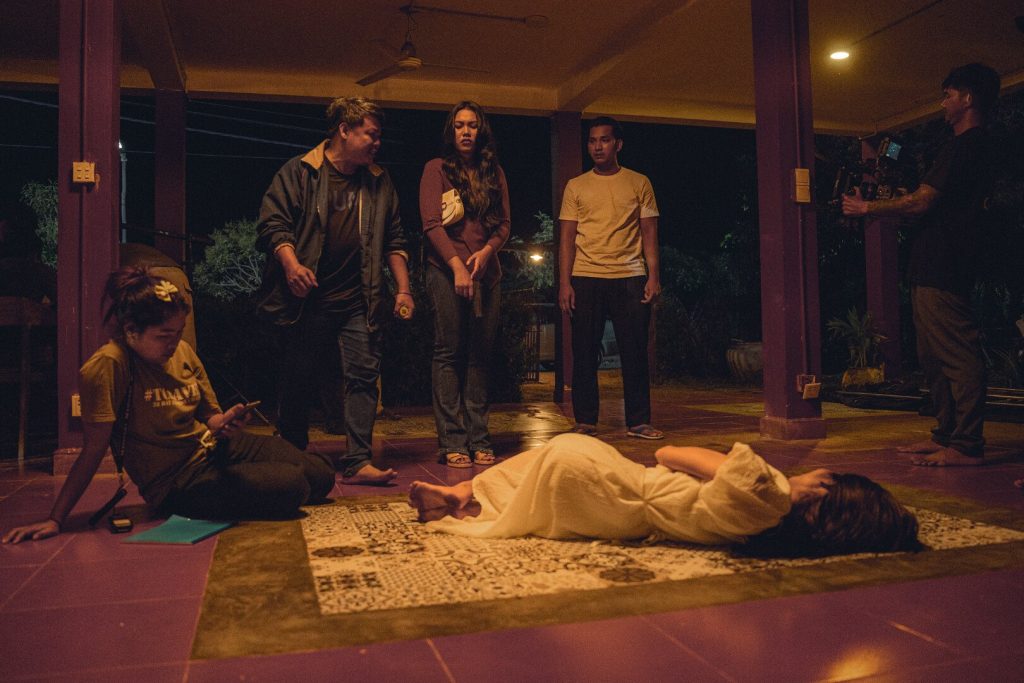
Seng Thy’s debut feature film follows Sophea, an apsara dancer haunted by her parents’ murder at the hands of her father’s jealous ex-wife, who later took her own life. As Sophea cares for her grandmother while facing her vengeful half-sister—determined to avenge her mother—she must choose whether to perpetuate the cycle of violence or finally break it.
For Sung Thy, the cycle of inherited violence finds new expression in Cambodia’s history. His film draws on the tensions of the Cambodia–Thailand border conflict, reimagining them through the lens of family.
“We had a war and border conflict that’s still relevant today,” he explains. “The film’s story represents why one side still feels the need to invade or retaliate, because the resentment has existed since the older generations and passed on to the next. The new generation should do something else to find a way to prosper together.”
On top of the history of conflict underlying the film’s plot, cultural elements are also brought into the story, such as the Apsara goddess. “In Cambodia, we believe in Apsara, a type of spiritual goddess,” he explains. “So people pray to some specific spiritual guardian to protect their homeland and their family.”
For director Sung Thy, The Offspring is not just a story of family revenge, it’s a reflection on Cambodia’s fading spiritual traditions and the grudges passed down through generations. “My story is also about the spiritual beliefs our communities have carried from generation to generation,” he explained. “The new generation in Cambodia is losing these rituals.”
The film’s story of generational loss and trauma draws on multiple sources, including Cambodia’s Royal Ballet and Thy’s childhood memories of reading ritualistic murder stories in newspapers.
“When I was young, waiting for a haircut, I would read these legendary murder investigations,” Thy explains. “I combined that with the Royal Ballet, family issues, and spiritual beliefs, along with the border conflict, to create this film.”
Beneath its family feud, The Offspring is a fresh take on a timeless ancient theme: old wounds don’t fade easily. When resentment is passed down, it’s the next generation that must decide whether to keep the curse or end it.
However, Sung Thy’s the Offspring is not the only film that explores the theme of generational trauma and loss in this edition of the AAIFF Asia 2025.
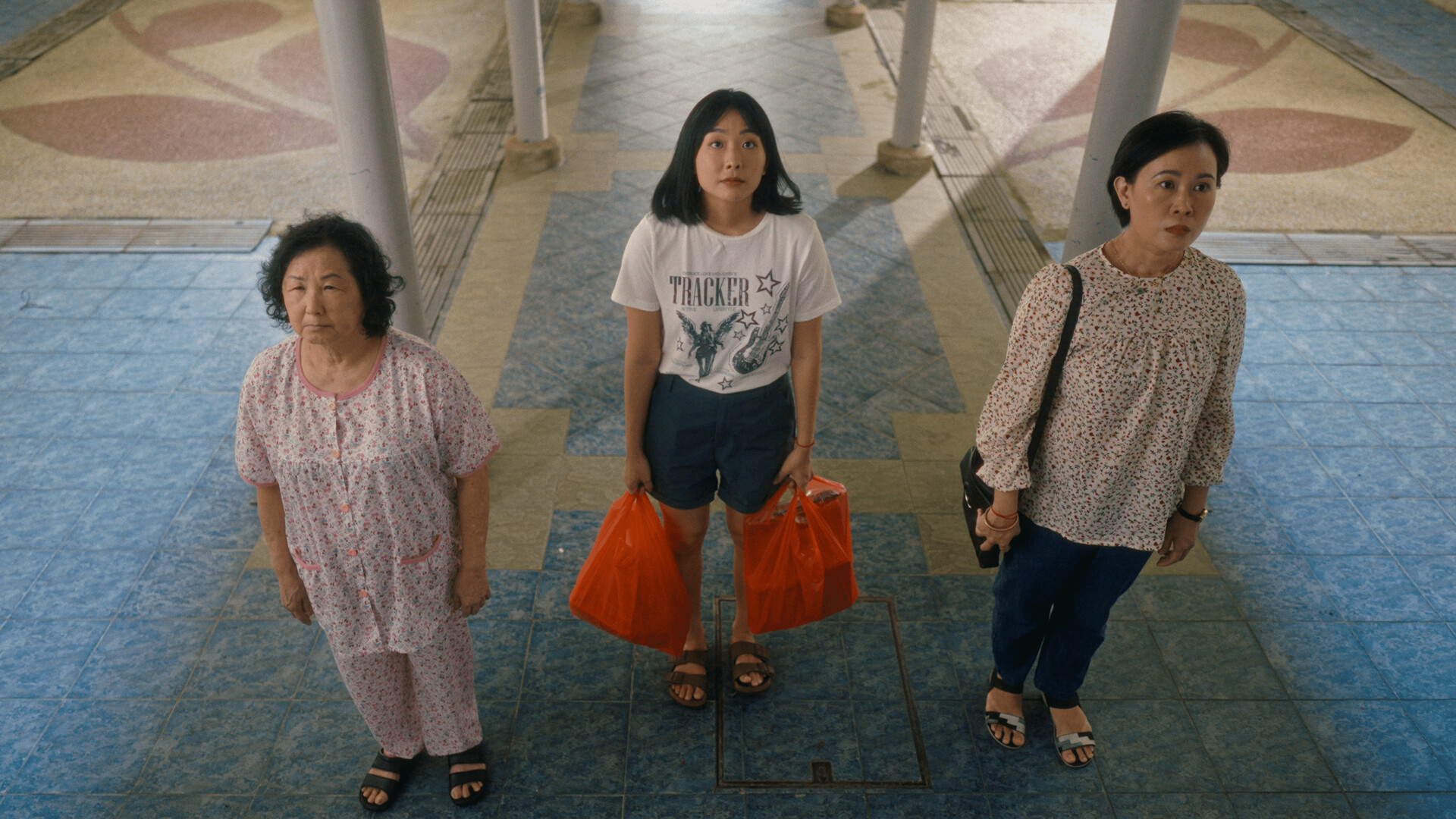
The Last Supper by Jerold Lim is another touching film in AAIFF Asia’s 2025 official selection. The Singaporean feature, inspired by Greta Gerwig’s Lady Bird as well as Valerie Faris and Jonathan Dayton Little Miss Sunshine, blends humor, grief, and tension between a mother and daughter. It follows Chloe, a young woman who can see spirits, as she races to save her late mother’s soul from becoming a “hungry ghost” by retracing her mother’s past life.
Rooted in Chinese and Southeast Asian traditions of ancestral worship, the Hungry Ghost Festival is a time when the spirits of ancestors are believed to return to the living world. Families offer food and incense to honor them; and, if this practice is not upheld, these souls wander hungry and alone. “It is a time where we do our prayers and think about the family members who have passed,” Jerold explains.
In the film, this belief is witnessed on a personal level, where the protagonist’s mother had once neglected to make offerings to her late husband, leaving his spirit absent from their lives. After her mother’s death, Chloe repeats the same mistake, forgetting to make offerings to her late mother. However, through rediscovering her mother’s story throughout the film and learning to forgive, she restores their bond with greater understanding of her mother’s love language.
“A parent will never say love: a parent will cut the apple and put it on your table when you study, and then later scold you because you never bring the bowl out to wash.”
One Last Supper
The inspiration for this film was a personal and introspective one on the part of the young filmmaker. “I came up with One Last Supper by just reflecting on my relationships with my parents,” Jerold expressed. “I think we know we love each other a lot, but we don’t know how to say it.”
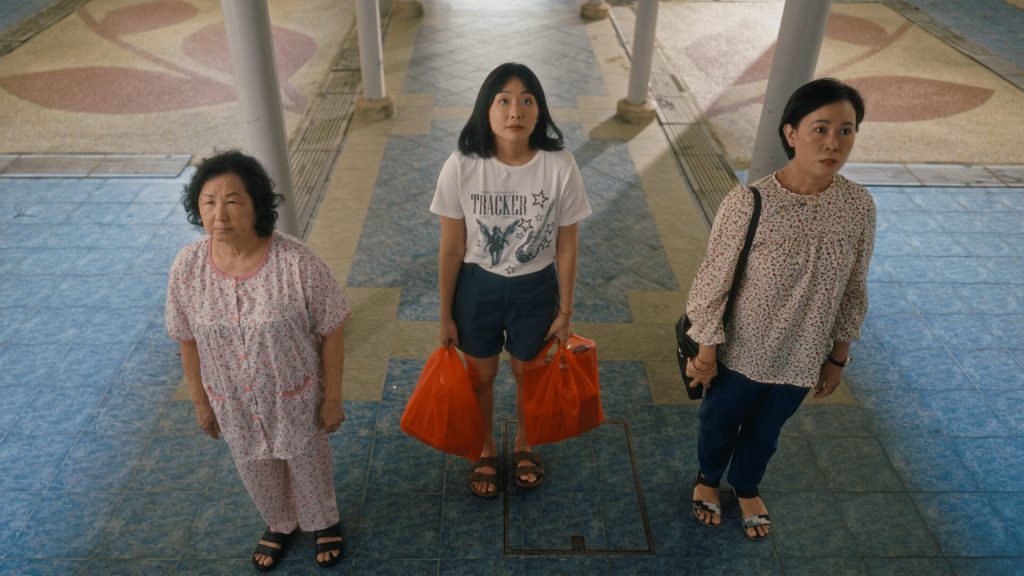
Still from One Last Supper (spirit elder women on the left, Chloe center, mother on the right)
Hoping to reach audiences beyond Singapore, Jerold focused on making the film’s core theme — the struggle to express love to those we love — come across as a continent wide intergenerational experience that is not spoken about enough.
“I think it’s quite an Asian problem because in Asian cultures, we don’t typically speak about our feelings to our parents, and they definitely don’t speak about their feelings to us.”
The recent graduate of NTU’s Wee Kim Wee School of Communication and Information also aimed to reach different generations with his film, explaining “I thought about how I could bring this message to both people my age and my parents’ age, and that’s how I came up with it.”
The film draws inspiration from the director’s personal moments with his father during the Hungry Ghost Festival.
“I thought about my rituals with my father and how that was a time of bonding, but a quiet one,” he recalled. “We would do our prayers and think about the family members who had passed, but no words were ever said. We both knew we were grieving, but we just wouldn’t say anything; and that’s how I bonded with him.”
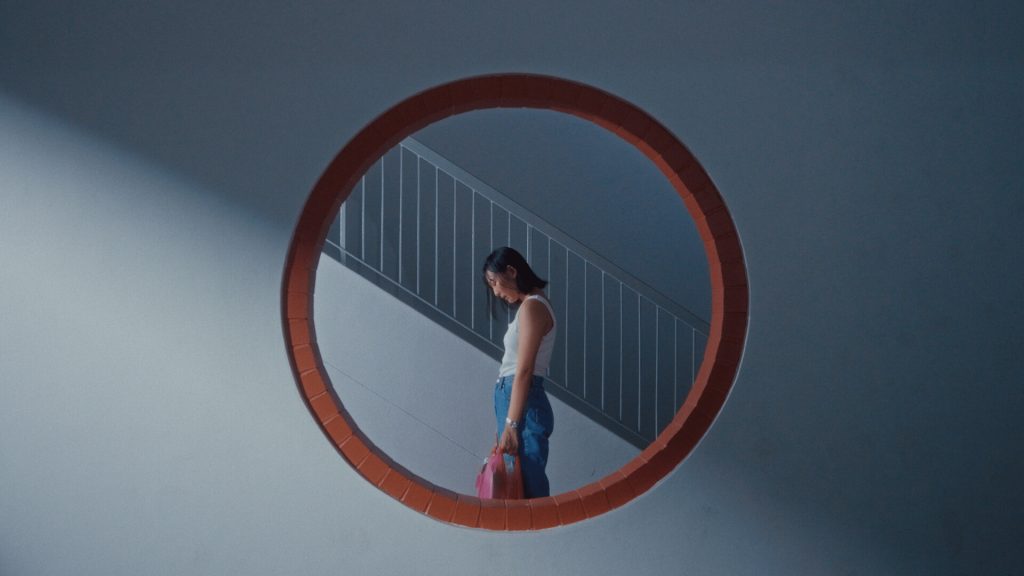
Still of Chloe struggling to find her mother’s spirit
Reflecting on his attempt at creating a moment of healing between the two generations, Jerold expands on his choice of including humor in the film and the importance of laughter in a film about grief and loss.
“I know it sounds a little morbid and strange, but the best thing to hear at a funeral is laughter,” he explained. “to be able to hear the same cousins, the same uncles cracking the same jokes, it makes us feel like things are still okay and things will be okay.”
The film serves as a way to heal, grieve, and connect in a way where love is felt even if the word itself is not used. “Humor helps bridge that gap for me to help me understand that. They might be gone, but I don’t have to crumble and lock myself away. I have to move on.”
As our conversations with each filmmaker drew to a close, the theme of generational cycles of violence, resentment, and silence resonated clearly. Sung Thy offered practical advice that reflects this lesson:
“It’s okay to ask for help. You cannot do everything by yourself,” he says. “Find help from everyone around you, because sometimes they can give you advice and make things possible.”
His words capture not just the process of making The Offspring, but the power of cinema to bring people together on set, in communities, and in theaters.
Both Jerold Lim’s One Last Supper and Sung Thy’s The Offspring will be screened at the AAIFF Asia 2025.
They will be competing along sides 28 films from 16 countries for 16 awards across 8 categories, including dramatic feature, documentary, animated creations, student films, and many more!
The festival will take place in Cambodia, Phnom Penh, this upcoming December 12th, 13th, and 14th, at the Olympia cinema. We hope to see you there!
For more information about AAIFF Asia 2025 and to see the official selections, visit https://aaiffasia.com/
Written by Soraya Keïta
 English
Leave a Reply