Note: This feature contains mentions of rape and sexual violence.
Across Africa, as in much of the world, female subjectivity has long been filtered through a male gaze rather than a woman’s own voice. For decades, women’s roles on screen were imagined, written, and directed mostly by men. Nigeria’s pioneering playwright Zulu Sofola once warned that society had “de-womanized black womanhood,” reducing the complexity of Black women’s identities to stereotypes.
Even the realm of independent cinema, often regarded as freer and more inclusive, has not fully escaped that pattern. Women directors across the continent have had to fight for space, funding, and the right to tell stories based on their own realities.
In this context, the All African Independent Film Festival (AAIFF Africa) offers a platform and opportunity for women to reclaim cinematic authorship. Among the 23 films from 21 countries featured in this year’s edition, seven were directed by women — including The Invisible Monster by Nenritji, The Yellow Dress by Caroline “Coach” Odongo, V’s Secret by Bassma Farah Nancy, and Aïcha by Sanaa El Alaoui, which we discuss in an exclusive interview in this issue.
History
Women’s presence in African cinema has more often than not been a challenge. During the colonial era, Western filmmakers dominated the lens, portraying Africa and its people as “exotic,” “submissive,” or “savage.”
Women, in particular, were reduced to sexualized passive figures or objectified and in need of saving. In 1927, Marc Allégret’s Voyage au Congo depicted Congolese women as part of a “primitive” landscape, while Zoltan Korda’s 1935 Sanders of the River framed women as oppressed figures dependent on benevolent colonial men.
The independence movements of the 1950s and 1960s began to open space for African self-representation, though their roles were initially confined to acting or supportive positions.
Institutions like the Pan African Film and Television Festival of Ouagadougou (FESPACO) and the Pan African Federation of Filmmakers (FEPACI), both founded in 1969, offered a collective voice to African filmmakers, including some pioneering women.
As the Cambridge University Press notes in Gaze Regimes, “African cinema born during the African independence movements re-appropriated the camera as a tool to counter the colonialist gaze that had dominated representations of Africa up until that time.”
Even as filmmakers began challenging colonial narratives, perspectives directed by and subjective to women were limited. Films such as Souleyman Cissé’sYeelen and Ousmane Sembène’s Black Girl or Ceddo actively and valuably addressed women’s experiences against coloniality and western notions of gender and sexuality, but mostly through male directed lenses.
It wasn’t until the 1970s and 1990s that women began to emerge more prominently behind the camera. Sarah Maldoror’s Sambizanga (1972) is a landmark example, telling Angola’s struggle for independence from Portuguese colonial rule through a woman’s perspective.
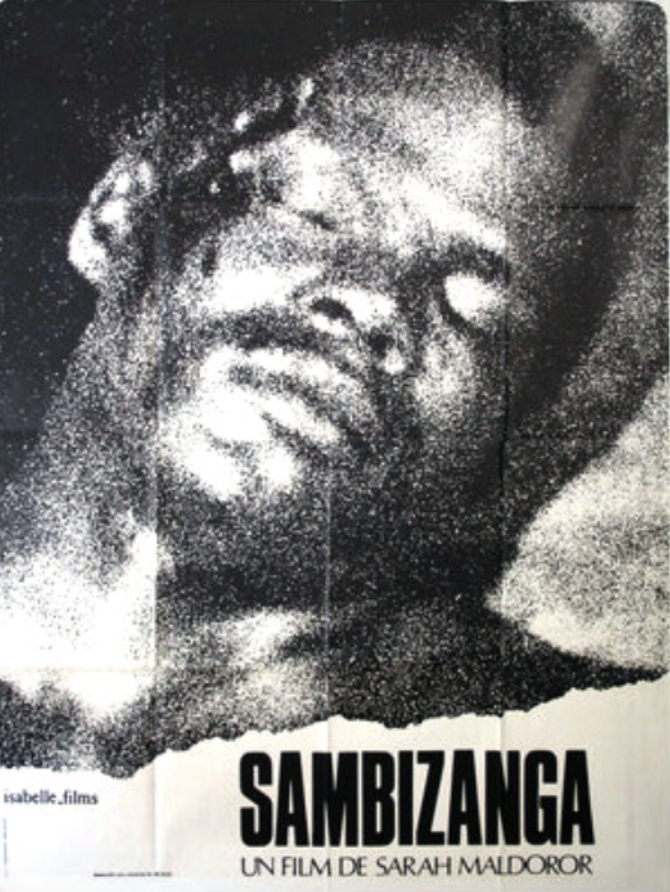
Film scholar Per Harrow observes that female African filmmakers provided “something more significant than Sembène’s images of long-oppressed wives or daughters,” exploring identity, trauma, spirituality, and resilience from distinctly female perspectives.
Today, women filmmakers continue to transform African cinema and build on this legacy. Festivals like AAIFF Africa contribute to keeping these voices visible, offering opportunities for new stories to reach audiences and for women to reclaim authorship of their own stories.
Sanaa El Alaoui and Her Film Aicha
Against this long legacy of storytelling, contemporary filmmakers like Sanaa El Alaoui are creating projects focused on women’s voices and subjectivities.
One of this year’s featured directors is Sanaa El Alaoui, a Moroccan filmmaker, scriptwriter, and scholar whose film Aicha reflects the strength and sensitivity of this still-evolving cinematic movement. The film’s cinematographer, Oskar Jan Król, won best cinematography 2025 and Hind Dafer—the brilliant actress behind the complex character of the mother in the film—won best actress (see full press release).
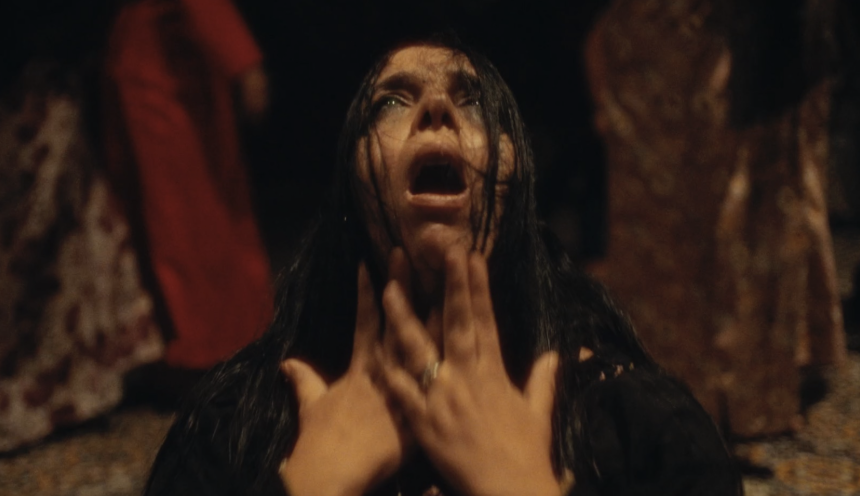
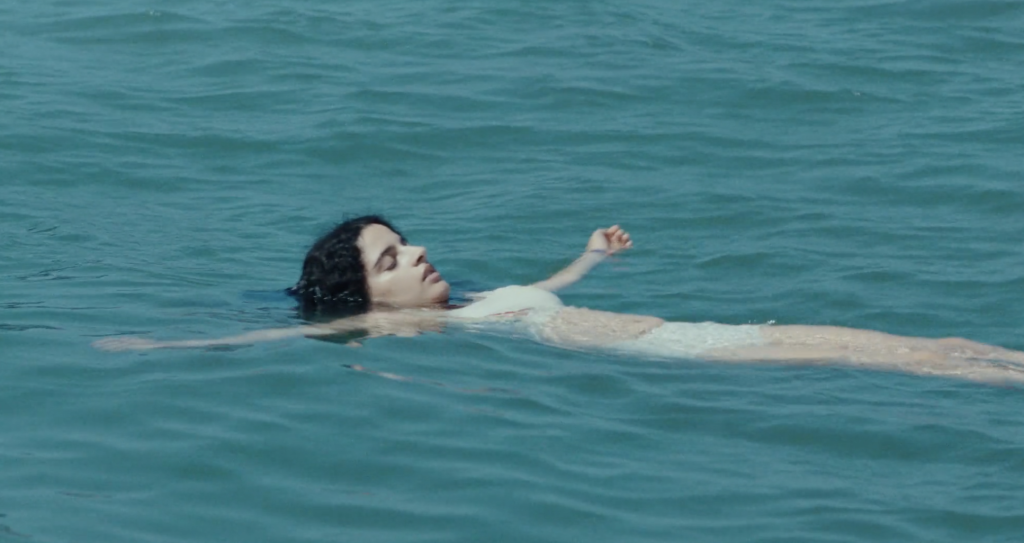
Aicha is a short film using both filmed footage and animation. It tells the story of a teenage girl struggling with mental health and an emotionally distant mother. In a moment of spiritual crisis, the mother turns to a traditional Gnaoua ceremony to reconnect with her daughter and heal their fractured bond.
The Gnaoua ceremony itself originated from enslaved West Africans who brought their music and rituals to Morocco, transforming the sound of their chains into instruments and transcribing their pain into song.
The Gnaoua ceremony is about experiencing all types of emotions,” says Sanaa. “It’s one of the only spaces in Morocco where women, men, queer communities — everyone — come together and reach a high level of emotion, grief, happiness. They let it all out.”
Filmed during a real-time Gnaoua ceremony, Sanaa intertwines the personal and political, using ancestral rituals of liberation to explore emotional and generational healing.
The Real Story Behind Aicha
The inspiration behind Aicha is a tragically real story. The film draws from Amina El Filali, a 16-year-old Moroccan girl who was raped and forced to marry her rapist by her own family.
“She was raped at 16 and then forced by her family to marry her rapist because it’s considered shameful when you’re raped, you’re considered dirty” Sanaa recalls. “Her husband continued to rape her during the marriage and she later took her own life. The law changed after that, but the mentality hasn’t.”
Following the widespread outrage over this case, rape in Morocco became punishable by five to forty years of prison, along with a fine of 200 to 500 dirhams. Yet Amina’s story remained one among many. The character of Aïcha is inspired both by this real-life tragedy, Sanaa’s own experiences, as well as the quiet suffering she has witnessed among Moroccan youth, silenced by families and societal pressures.
The film’s emotional core lies in the way collective shame continues to imprison women even when the law is beginning to change these ideas.
“The law is mostly there to protect the citizens, but it’s how families, how mothers, how parents look at the situation,” Sanaa explains. “If their child is raped, are they going to protect you? Are they going to make you marry someone to avoid public shame? I wanted to cover that topic because we still have people suffering from that.
Through Aicha, she also brings attention to self-harm among Moroccan teenagers, a subject often ignored or stigmatized.
“My little sister went through this,” she shares. “When my mother began talking about it, half her friends said their daughters were the same. It’s everywhere, we just don’t talk about it.”
The Challenge of Being a Female Independent Filmmaker
Making Aicha was not only emotionally demanding but logistically and financially difficult.
“We got rejected from all funding institutions,” Sanaa explains. “at the time we were having our wedding and we just collected all the gifts and used the money for the film. The rest was my husband who self-funded it with his work with some of my own contributions.”
The story she tells about taboo, trauma, and family silence highlights the struggle of making the film itself. To bring it to life, Sanaa had to confront societal constraints and navigate a system that often underfunds independent films, especially when themes considered taboo are centralized to bring awareness to these topics.
“When I go to festivals and hear other filmmakers talk about the same hardships: the struggles, the personal reasons behind their films. I’m honestly amazed,” she says. “I salute them. Hearing where they come from and why they make their films makes me proud to be part of this.”
Decolonizing the Gaze
Sanaa’s practice centers on decolonizing the lens. She describes her process as a negotiation between history and film technology.
“While making this film, I approached it through the lens of post-colonial identity, like trying to work as a post-colonial being with a camera invented by the West,” she explains. “It’s a tool built on a way of communicating very different from Moroccan or African art. So how do we deal with that?”
Her answer comes through the way she reimagines time in Aïcha. Instead of the linear rhythm of Western cinema, she brings in what she calls “time and space from an indigenous perspective” where time is circular, overlapping, and where life, death, joy, and grief coexist.
“In Morocco and a lot of Africa, we don’t have this specification with the hours and the clocks,” she says. “In our [Moroccan] indigenous culture, it’s all happening together: the past, the present, the future. That’s how I wanted to make the film feel.”
By blending these layers of time and emotion, Sanaa not only tells the story of Aïcha. She reclaims an otherwise standardized language of cinema and an indigenous system of time in the very fabric of the film through a feminine and Moroccan decolonial lens.
Female Subjectivity
For Sanaa, the making of Aïcha also was a deeply personal project. Inspired by her own personal reflections, experiences of motherhood, and observations in Morocco, the film reflects some of the intimate realities of female subjectivity: the inner emotional life of women in Morocco shaped by societal pressures, family dynamics, and personal trauma.
“When I was writing the script, I was pregnant,” she says. “I was terrified of motherhood, of something happening to the baby I hadn’t met yet. Writing this script became therapy.”
Even her own childbirth inspired a scene in the film.
“During labor, I was taking notes for the birth scene,” she laughs. “My husband told me to focus on giving birth, but I was living motherhood and living the film at the same time.”
Through these experiences, Sanaa breathes lived experiences into the fabric of the film. She captures the intersection of lived experience and artistic creation, using her own personal perspective as a Moroccan woman to represent womanhood and motherhood in a raw and impactful way.
Aïcha becomes a meditation on female subjectivity. She portrays the love, pain, violences, and complex emotional turmoils of women and mothers in Morocco, both from her own observations and her own experiences.
Depicting Rape Through a Decolonial Lens
Few scenes are as difficult to portray on screen as rape. Too often, films directed through a male gaze reduce violence against women to sensationalism, focusing on the sexual and physical act rather than its emotional impact. Audiences are kept at a safe distance, watching the narrative unfold without confronting the trauma it depicts.
Sanaa El Alaoui wanted to take a different approach. “There are thousands of films about rape, but most of them fall into clichés,” she says. “I wondered: how can I actually put people in the moment of rape itself? How can they experience it in that specific moment? And for me, the safest option is animation.”
In Aïcha, the rape is never shown explicitly. Instead, a haunting black-and-white animated sequence depicts a fish sliced in half by a knife — a symbolic rendering that conveys the violence and horror without literal imagery. The audience leaves the physical world of the film and enters a space of sensation and emotion.
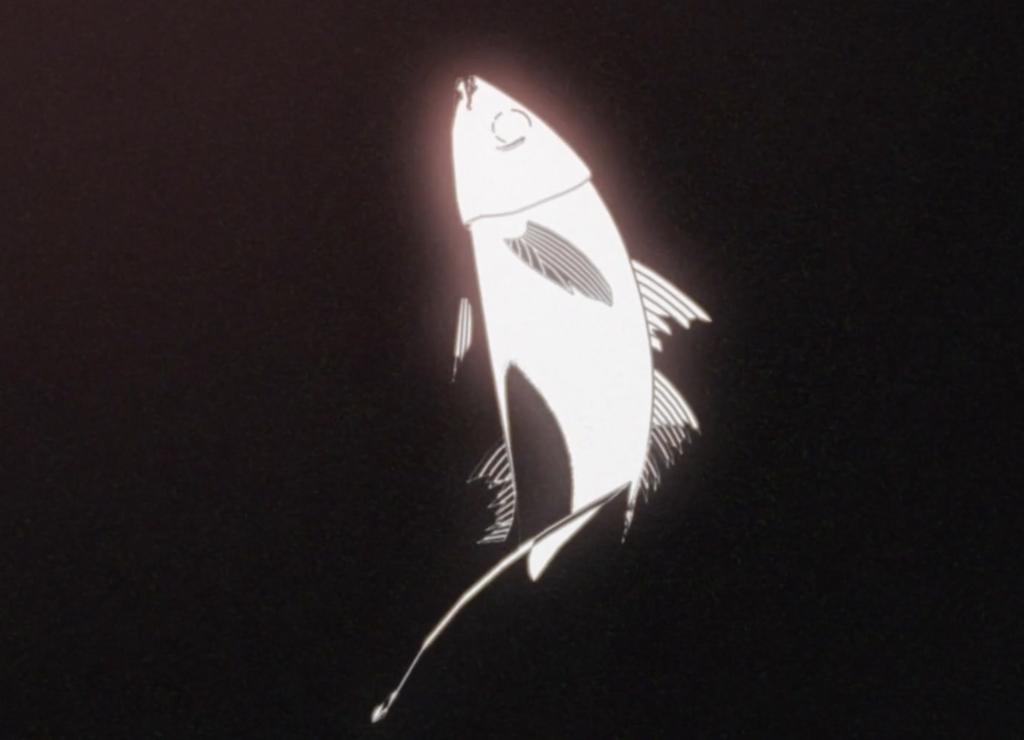
Film theorist Vivian C. Sobchack writes that voyeurism is central to cinema’s appeal, but when rape is what we watch from a safe distance, that comfort risks turning into complicity. Aïcha flips that dynamic: the violence is not something to watch from afar, but a force that shapes the story, haunting the characters and the narrative itself.
“Animation allows us to materialize what we cannot talk about in the most viewable way,” Sanaa explains. “While not shocking people, I am putting them in the moment of rape.”
Life and death, past and present, intertwine throughout the film. The story opens with a birth and a death and closes the same way, linking the trauma of the past — a legacy of colonial violence — to the silences and suffering of the present, all in the same breath. Within this context, the rape is not depicted as a single sensationalized event. Instead, it serves as a thread woven throughout the film, compelling viewers to confront the broader social, cultural, and colonial forces constraining Aicha’s life, and grieve her before witnessing the act of rape itself.
The Soldiers of Independent Cinema
Following the film’s win for Best Cinematography, Oskar Jan Król reflected on the experience with a mix of joy and gratitude.
“How do I feel after receiving the award? A little less depressed, and nearly happy,” he said humorously. “Mostly, I’m glad people enjoyed it, that professionals appreciated the craft. It felt like the right story told at the right time.”
The moment was especially moving for actress Hind Dafer, who called hearing from the director about her Best Actress win “unforgettable.”
“Tears of joy filled my eyes,” she said. “It is a recognition of effort, creativity, and genuine art that conveys sincere emotion.”
The award-winning actress said the role demanded full emotional immersion.
“This role required a great deal of emotional effort from me. I am one of those actresses who fully immerse themselves in a character, embracing all its dimensions and living it with every part of my being,” she explained.
She concluded by thanking her team: “To them, I say thank you, I love you all.”
Director Sanaa El Alaoui shared that sense of pride.
“I am very happy with the awards,” she said. “Both Hind and Oskar truly deserve them. They worked incredibly hard to deliver performances that align perfectly with my vision as a director. There was so much harmony on set, which made the creative process an absolute joy for me.”
Moving forward, Sanaa sees herself and other African independent filmmakers, as part of an ongoing struggle for creative freedom and authentic storytelling.
“I call them soldiers,” she says, referring to her fellow independent African filmmakers. “It’s like a war between commercial and independent cinema, and we keep fighting. We’re still here.”
For Sanaa, the future of African cinema lies in returning to its own roots, colors, rhythms, and emotional truth.
“We, as Africans, have so much to give: our rich histories, our roots, our culture, colors, time, space. If we actually connect with all of these elements, we can produce something great.”
With Aïcha, Sanaa El Alaoui contributes to a legacy of women who use cinema to reflect society’s hidden struggles and amplify unheard voices.
By reclaiming the female gaze and reimagining womanhood on screen, Sanaa and her peers are doing more than making films: they are contributing to the redefinition of how Africa, and the world, see women.
“Enough of looking at us as exotic beings,” she said. “We have something to say. We have a voice. We have stories. So we should speak.”
Written by Soraya Keita
 English
Leave a Reply