Written by Nicole Trinkl
A few months ago, I had the opportunity to interview some of the female filmmakers who were nominated at ÉCU 2024 Independent Film Festival, including writer, producer, and director Binnur Karaevli, Esin Özalp Öztürk and writer, actress, and director Violeta Valcheva. With ÉCU’s 2025 festival coming in less than a month, we wanted to remember and spotlight some of the former female filmmakers who were nominated at the festival. In our conversation, they talked about their films and voiced their opinions on the gender biases and inequalities they experienced within the industry.
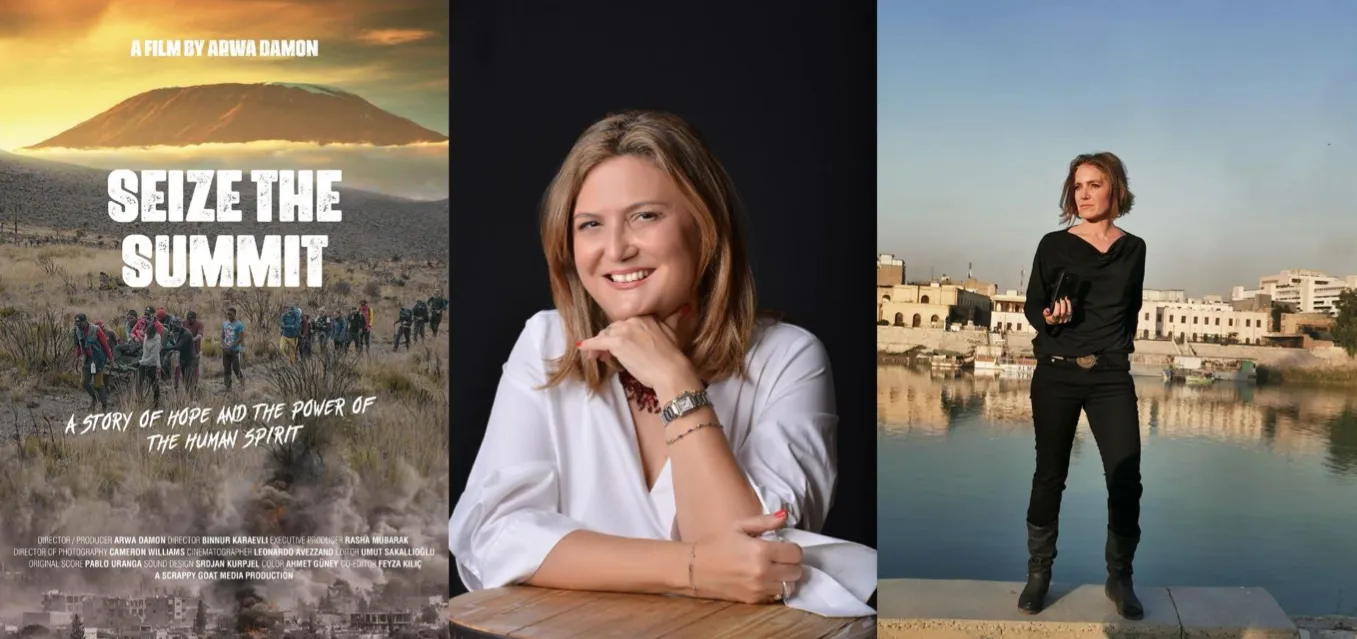
The first director I talked with was Binnur Karaevli, co-director and editor of the film Seize the Summit, which she produced alongside journalist Arwa J. Damon. Seize the Summit follows the story of four refugees and their journey climbing Mount Kilimanjaro in a week-long trek. A metaphor for overcoming challenges, the film depicts the lasting effects war has on individual lives and brings light to the pain and suffering many war survivors experience.
The film, organized by the non-profit organization Inara, which was founded by Damon, is meant to “raise awareness about the impact of war,” Damon said in the film. Capturing the individual stories of Syrian refugee Safa, Ukrainian Refugee Tania, Afghan refugee Shaquayeq, and Syrian refugee Adnan, we see the odyssey of how they fled their home countries and how they collectively climbed up the mountain.
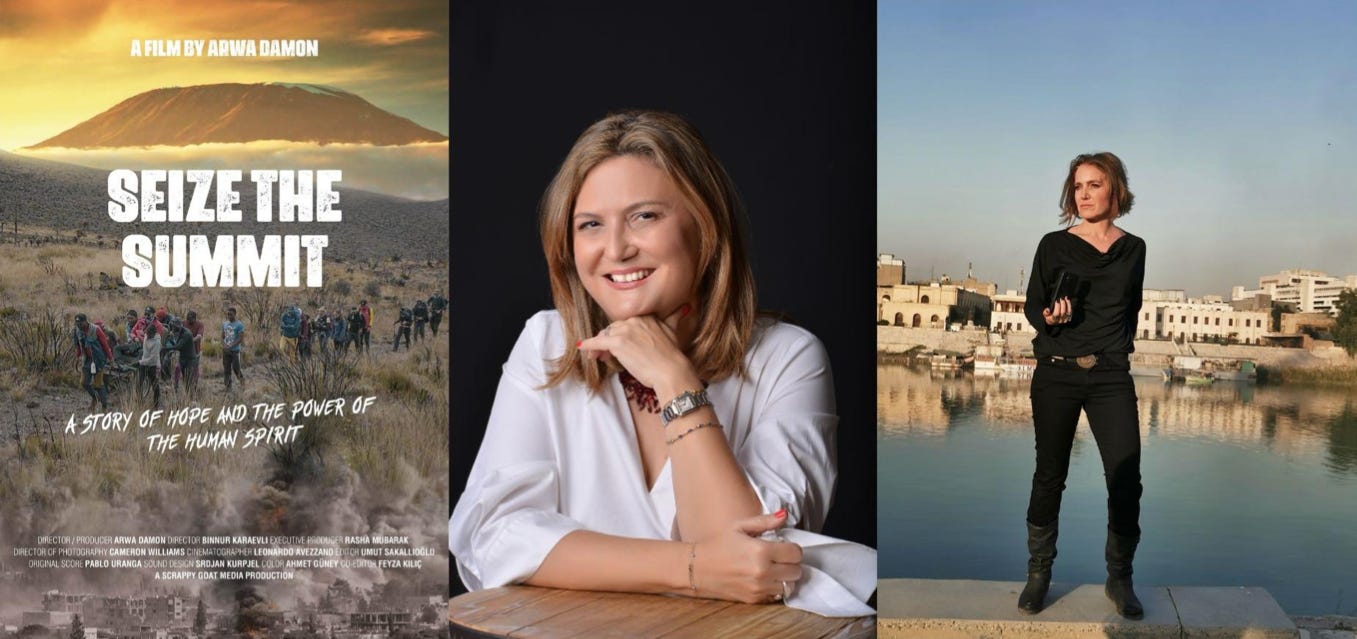
With most of the film already shot, Karaevli joined Damon in helping edit and shoot some clips for the film, she said. “It was actually a challenge for me to come on board of a film that most of it was already shot,” she said. “I approach every project like a challenge, and this was a really interesting challenge.”
Karaevli and Damon worked together for approximately nine months to a year. With over “150 hours” of footage, Karaevli helped weave the stories of all four war survivors together to create one cohesive picture. “What I brought to the project is my years of experience of the dramatic structure and how to tell a story in a more filmic way,” she said.
Seize the Summit sheds light on the effects war has on people’s lives. “One of our missions with this documentary was really humanizing what it means … [to be] a refugee,” Karaevli said.
Centered around the stories of young people, Damon and Karaevli wanted to capture an “uplifting story,” she said. “[It’s] important to show that these four characters hadn’t given up and that they have been really working towards getting over the trauma themselves. … They want to be role models to other people, and they have found, still, despite all the difficulties, … joy. It’s really about the resilience of the human character.”
At ECU’s 2024 festival, Seize the Summit won the Excellence in Women’s Filmmaking award, which gave recognition to the wonderful work both Damon and Karaevli accomplished when making this film. It’s not always easy being a female filmmaker, and it’s important to give recognition where it’s due.
When I asked Karaevli about her thoughts on the film industry, she described being a female filmmaker as “tough.” Karaevli has worked in many countries throughout her career, including Turkey, the United States, and London. She created the first Netflix show for Turkey, The Protector, and has worked on various other films, including being a director and writer for The Eyes of Istanbul and was a producer for the Voices Unveiled: Turkish Women Who Dare.
Karaevli attended USC film school for her graduate degree and expressed that during her time there, she saw very few women filmmakers. This has since changed with an increase in women attending film school and entering the industry, but despite that, Karaevli described feeling like there are still gender biases and a lack of representation for women, especially when trying to get jobs.
“A lot of the really, really top decision-makers … are always men and I think men always feel more comfortable, especially with directors being male for some reason,” Karaevli said. “If you look at even the academy awards or how many directors get nominated, the numbers for female directors … hasn’t really improved.”
She expressed feeling that in Turkey, female filmmakers were supported more than in The United States. In the U.S., the percentage of female directors in 2024 was only 15.4%, according to Statista. This is an increase from previous years, but still a small percentage compared to men. I was not able to obtain specific data on the percentage of female directors in Turkey, compared to males, but Turkey’s film industry is known to be very “male-dominated,” as stated by VOA News.
Another interesting point Karaevli mentioned in our conversation was that she felt like there were more female documentary filmmakers in the industry than female narrative feature film directors. Feature films, Karaevli explained, tend to be more expensive as a result of having to hire actors, costume designers, crew members, etc. It is not always easy to get the support to make those big films.
“Documentary is something you can do with a smaller crew and with less money,” she said. “That is why I think that female directors end up having tried doing some narrative [filmmaking], [but then decide] to do a documentary because it’s easier to put together financially. The doors are much more closed for other types of films, but documentary is more independent and less costly.”
According to the Council of Europe, only 26% of directors of European Feature films were women from 2018 to 2022. When it comes to documentaries, according to a study done by
San Diego State University’s Center for the Study of Women in Television and Film, it’s estimated that between 2022 and 2023, 44% of individuals working behind the scenes for documentaries were women. The study also found, as Karaevli stated, a decline in women working on narrative feature films in 2023 and 2024.
Karaevli believes that there are things being done to improve the gender gap and help women, but emphasized the importance of having more programs and training that specifically help women filmmakers get employed in the industry, especially in director roles.
Karaevli also stressed the importance of having more “female-centric” stories and “strong female characters” shown in the mainstream. “It’s really important to give a voice to female writers, directors, and producers to tell more stories about women,” Karaevli said.
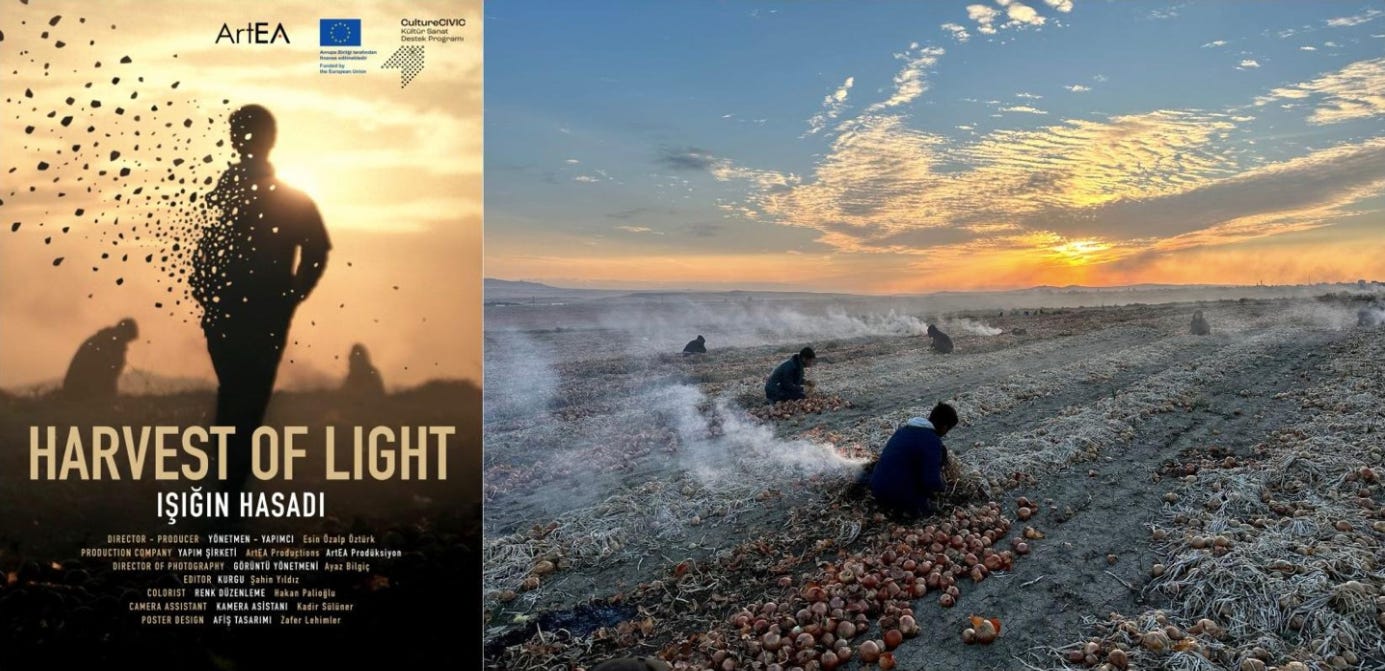
Another Turkish filmmaker I was fortunate enough to interview was director, writer, and producer Esin Özalp Öztürk. Her film Harvest of Light was nominated for the Non-European Documentary category at ÉCU and was the first film she made with her own production company, ArtEA Productions.
Harvest of Light documents the harsh reality of seasonal workers who come to Evren, Ankara, in Turkey, to harvest onions to help provide a better life for their families.
“The problem of seasonal workers is a big issue in Turkey,” Öztürk said. “I … always [wanted] to make a film about it, but I [didn’t] … want to produce something or … direct something cliche.”
Öztürk explained that she first became aware of the seasonal workers in Evren when the Director of Photography of the film called her and mentioned having come across seasonal workers who had a running generator for only two hours a day with no other access to electricity. Öztürk and a few members of the film crew visited Evren to witness the conditions and stories of the workers, which was the beginning of her making the film, she said.
Many of the harvest workers in the documentary come from the Southeast part of Turkey. “They don’t have places to work like factories or big businesses. They are all relying on agriculture … The economic situation is worse for them,” she explained.
A lot of the workers that come to harvest onions have big families. Some of the families who come to the fields could have up to five, ten, or even fifteen children, Öztürk explained. Due to many family’s economic situations and need for money, many children end up working in the fields. Each worker gets paid by how many sacks of onions they collect, she said.
“[The workers] say it’s more logical to come to harvesting than staying in their region,” Öztürk said.
The film really delves deep into the hard living conditions the seasonal workers live in and also highlights the stories of women who, on top of working the same hours as men, are expected to do the domestic responsibilities, including cooking, laundry, and childcare, when they came back to the tents after working in the field, Öztürk explained. “All of the women [were] working twice or triple times more than men,” she said.
The most important thing Öztürk really wanted people to get from her film was to recognize “the story behind” all the products we consume. Behind all the produce we buy, whether it be an onion or any other food, there are humans working hard behind the scenes to get that to your grocery stores.
Harvest of Light, beyond depicting the lives of harvest workers in Evran, Ankara, highlights women’s stories. Through her film, Öztürk really emphasizes and showcases the prejudices that women still face, even in the fields.
“Convincing the women to be a part of the film was the biggest challenge for me because of their cultural norms,” she said. In some cases, the husband, father, or brother would not give the woman permission to be interviewed or featured in the film, she explained. In other cases, many of the women were reluctant and “shy” to be featured in the film, Öztürk said, and she had to really “try to convince them” to be in it. After the first few days, more women began to understand what she was trying to document, and they were no longer reluctant but supportive of the film, she said.
Once the film was complete, Öztürk screened the film for the women in Urfa, and they expressed really enjoying watching the film.
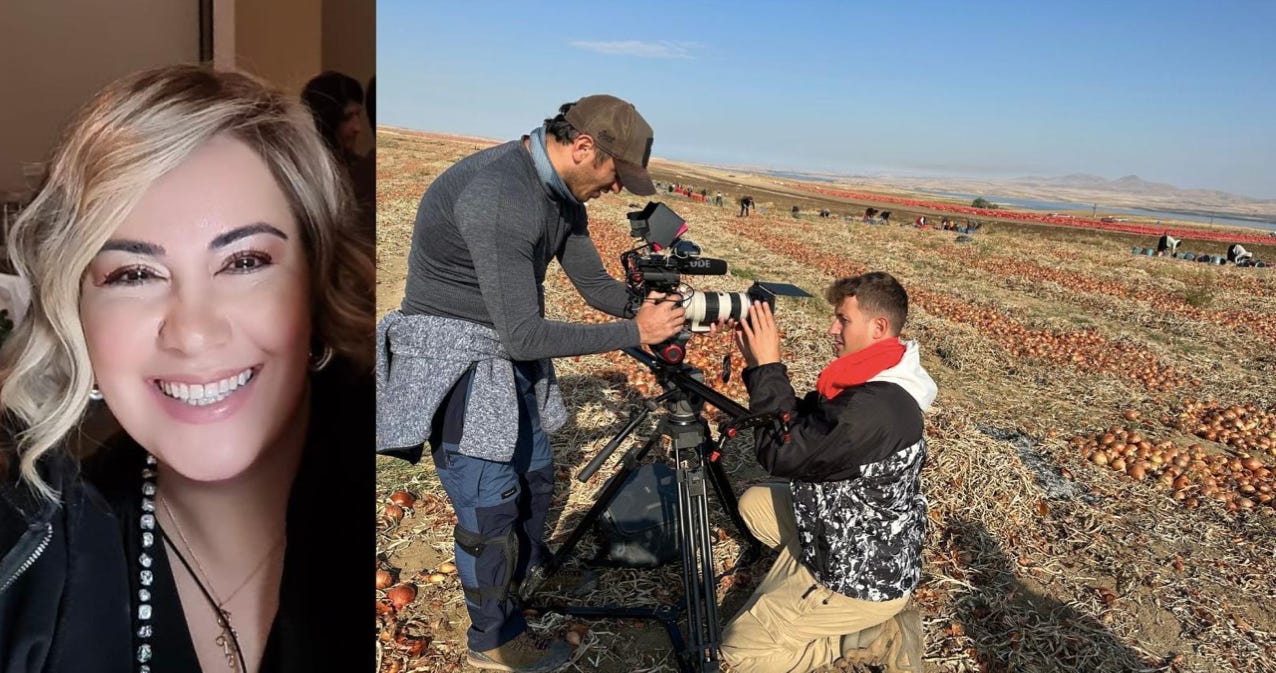
When I asked Öztürk about her experience working in the industry, surprisingly, like Karaevli, she also described seeing a lot more women documentary filmmakers than men, specifically when she was working at the Turkish Radio and Television Corporation (TRT).
Despite the biases and inequalities that are still present in the industry, Öztürk expressed that she did not feel held back from opportunities because of being a woman. “I didn’t feel like I was struggling to build a career for myself as a woman, but as a filmmaker,” she said.
An interesting point Öztürk brought up in our conversation was about the hard-working conditions many film professionals have to work in, especially in director or producer roles for big television or film productions. Öztürk mentioned one very popular Turkish series that shoots single episodes as long as 120 minutes in a week, being very demanding work for both men and women. Being a very big industry, she explained, production companies don’t always take into account the lives and responsibilities especially women have outside of work. A director or producer is expected to be on set almost all the time, either directing or preparing for filming, she said. Many women have responsibilities outside of their work, for example, taking care of children, and men do not always have to bear the same duties women have to, especially if they have a wife at home taking care of those tasks, Öztürk explained.
“For the women director [and] for the women producers it’s more hard because you can’t be on the set day and night,” she said. “We have many very successful Turkish directors, but there aren’t as many as the male ones.”
Especially on set, shooting for these big productions is a very laborious job. “The conditions are so hard and that’s why the percentage of women on the set in the production company is less than men,” she said.
Öztürk expressed how a lot of her friends, both women and men, who work in the film industry, specifically for private production companies, had ended up quitting their jobs as a result of the long hours and sacrifices they had to make to be working for those companies.
“The profession itself does not give you permission to have another life,” Öztürk said. “You have to live, work, and do everything on the set.”
Although Öztürk expressed knowing both women and men who quit, she did observe women quitting at a higher rate. As a result, Öztürk really advocates for having more unions that support better working conditions for all filmmakers.
Last but not least, I was also able to talk with Violeta Valcheva, filmmaker, producer, and co-choreographer of the film In Between, which was nominated for the European Experimental Film category. In Between captures the art and life of Nigerian born and Bulgarian raised actress and poet Bistra-Ijeoma Okereke.
Valcheva described wanting to capture the idea of “in-betweenness” and the feeling of “not belonging.” Throughout the film, we see Okereke dance, talk, read her poetry, move her body, and ultimately express herself in all different forms.
“[The film] is really about giving [Okereke’s] point of view from a more artistic perspective,” she said. “[Okereke] is presenting her poetry, but there is also an intimate conversation with her … But, what, for me, was important is that basically people could relate to this [film]. Even though it’s such a specific story, you can still feel the idea of in-betweenness and feeling that you don’t belong or belong to a certain point.”
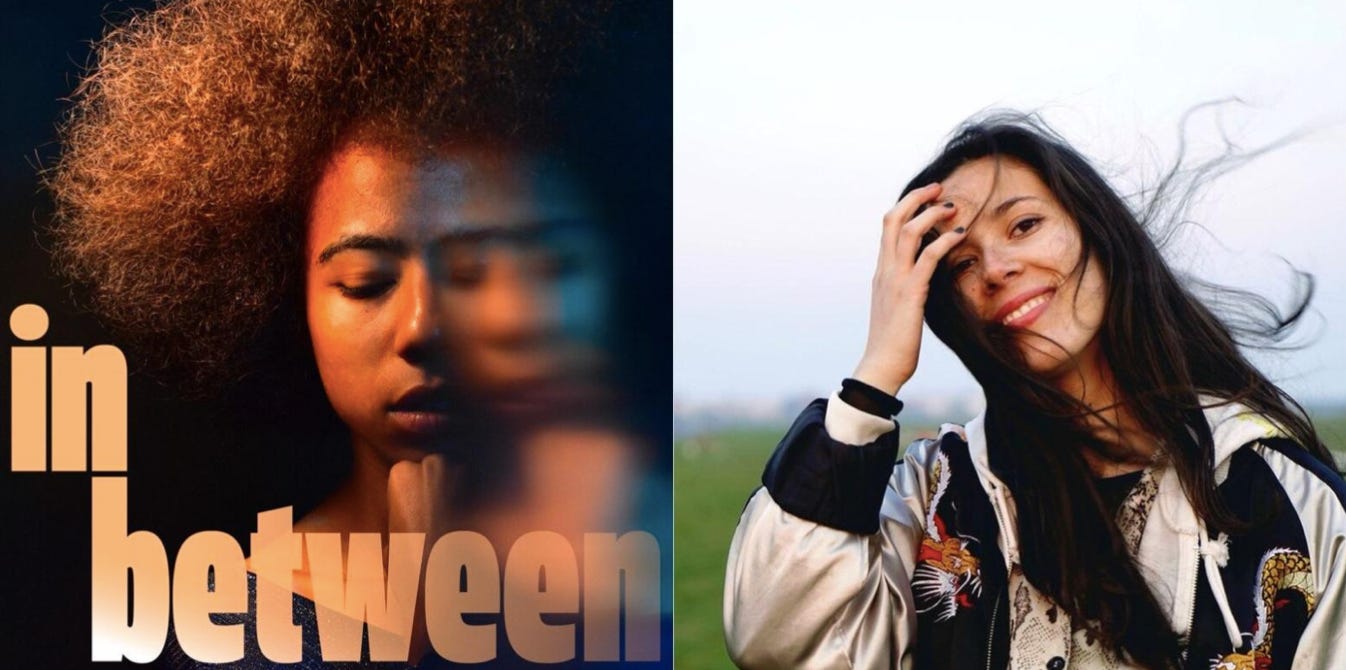
The origin behind the idea of the film was a conversation Valcheva had with Okereke on her coach at the end of COVID-19, she said. Friends for a while, Okereke had published a poetry book that she lent to Valcheva. Through reading her poetry and having had long conversations about art, literature, and Okereke’s background, Valcheva had the idea to make a film about her.
Valcheva wanted the film to feel as authentic to the conversations they had as possible. Through acting, dance, and poetry, Valcheva wanted to capture “Bistra’s essence” through art, she said.
The film was shot in three and a half days in two different locations: in Sofia, Bulgaria, and by the seaside. Valcheva worked closely with her editor to really combine Okereke’s interview, dance, and poetry to make the picture “flow” and ultimately capture the vision she had for the film.
In our conversation, I was also able to explore Valcheva’s thoughts and experiences of the industry. Although Valcheva stated having an overall positive experience and supportive community, she also described having other not-so-pleasant moments where, for example, people would think that she was an extra or actress rather than working on the film set. Valcheva also described another instance where she wanted to work with a producer from a specific production company and instead of taking her seriously, was “hitting on” her.
“There are definitely biases,” Valcheva said. “There is very little representation. The stories, in general, are very male-centric … But I think there is a strong counter moment to that where there are a lot of communities that support women and that they want to elevate women. So I am really positive, … but I also recognize the fact that a lot of people in the industry who are not actresses are men.”
Valcheva described how there were instances where she would be the only woman working on the set for projects. Like Karaevli, Valcheva also described feeling a lack of female representation and opportunities for women in the industry.
“I call it the boy club syndrome,” Valcheva said. “When it comes to filmmaking, it’s very much about connections and if you know people.”
She expressed how, in some cases, film directors tended to help other up-and-coming male filmmakers over women. “Guys know guys, guys uplift guys,” she said. “It’s difficult to penetrate.”
For the filming of In Between, Valcheva described advocating for the majority of roles in her film to be done by a woman. Even her cinematographer was a woman.
“I really wanted to keep a woman’s perspective. It’s not addressing feminism as a whole, but the way the story is told has its own feminine touch. That’s why I wanted my DOP (Director of Photography) to be a woman because her gaze is going to be different from a guy’s gaze.”
In terms of what lies ahead in the industry, Valcheva expressed that she definitely has hope that things will change. She stated that there are already a lot of organizations supporting women, and she remains “optimistic” but also “realistic in terms [that] it [will require] some work,” she said.
One of the bigger issues Valcheva described that needs a lot more work is production companies giving money to more women filmmakers so they can be supported in their projects. Having more films from female filmmakers encourages other women to also make films and ultimately promote more “diverse storytelling,” she said.
To wrap up, I hope you learned more about some of the female filmmakers who were nominated at ÉCU’s 2024 festival and their thoughts on the film industry. With ÉCU’s 2025 Festival coming in less than a month, be on the lookout for all of the women filmmakers participating in the festival! ÉCU’s 2025 Festival will take place May 9th, 10th, and 11th at Les 7 Parnassiens cinema! We can’t wait to see you there!
To see ÉCU’s 2025 Official Section go to:
Written by Nicole Trinkl
 English
Leave a Reply