The Appeal of Horror Movies – A Divisive Genre
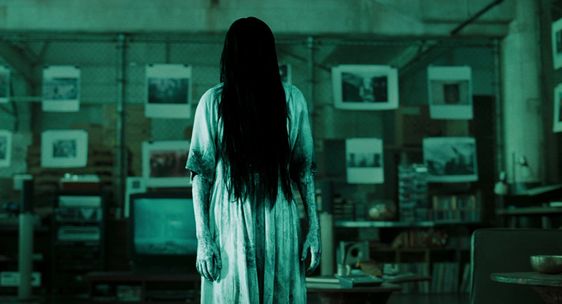
In honor of spooky season, we are taking some time to ponder the aesthetics of horror. The genre of horror is quite possibly one of the most divisive genres in film. Depending on who you ask, horror flicks like The Ring (2002) or It (2017) elicit extreme reactions of love or hate and rarely any emotions in between. Some viewers openly take a macabre pleasure in images of suffering and death, while others tremble at only the thought of watching a 90 minute-long film about homicide, gore or cannibalism. In fact, a 2022 YouGov survey1 of a thousand Americans found that it is by large the most polarizing movie genre out there. Though a historically low-budget industry, horror’s faithful fan-base enables it to make box-office profits quickly and allows it to maintain a respectable share of Hollywood productions, despite being a genre which has existed for a long time. Regardless of your opinion on it, horror grips and fascinates viewers on a universal level. After all, fear is a primal emotion. What, then, makes horror so fascinating to the public, despite scaring and disgusting us?
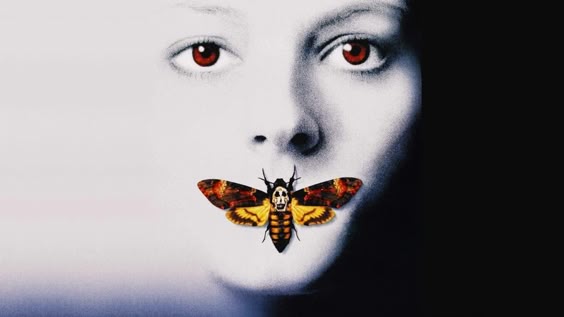
Why do we love to be scared?
One reason horror is so gripping on a cultural level is because of the visual and emotional stimulation it provides. In fact, the psychological and physiological exhilaration triggered by watching scary scenes not only activates negative emotions but also distinctly positive ones in certain people. A 2021 article by the Harvard Business Review2 even concluded that the positive stimulation, for example joyful pleasure, elicited by terrifying images ironically peaks at the scariest moments in a horror film. This is explained by the rapid release of the hormone adrenaline by our nervous system as a response to fear, which, in addition to preparing the human fight-or-flight3 instinct, can give viewers a warm rush and improve their wellbeing after the climactic scare. Furthermore, fear-experts Scrivner and Clasen (2020)4 have demonstrated that the playful stimulation of our fear response by a fictional narrative can help us trivialize our own real-life problems, therefore improving our mood.
Experiencing terror through film can also enable us to encounter scenarios which would either be impossible in real-life or simply too scary to want to live through in-person. Research by the Recreational Fear Lab5 at Aarhus University, found that the relatively novel situations we face when watching horror movies can help us learn crucial things about ourselves and how we would handle dangerous situations. Feeling recreational fear allows viewers to more objectively reflect on how they perceive fear and how much they can exactly handle. The simulated fear posed by horror films consequently allows viewers a safe space to mentally prepare for future high-stress situations and express their natural emotions without lethal consequences. At the same time, watching horror gives us a sense of adventure, posing an exciting challenge to the ‘normality’ of everyday life. Accordingly, it can give us a sense of pride and confidence in having overcome our fears through direct, visual confrontation. In this way, consuming horror media can actually empower us and strengthen our sense of identity.
In addition, horror fulfills a part of our intrinsic human curiosity6 about the darker aspects of society and lets us glimpse the twisted psychological processes behind the inexplicable behavior of others. This same fascination around what motivates cruel personalities or violent acts is what draws us to true crime and violent news stories. That is also the appeal behind horror movies which involve folklore or the escalation of ordinary community dynamics – such as Midsommar (2019)7 – which chronicles the progressive savagery of a rural Scandinavian cult. After all, our scariest nightmares can stem from the most realistic of scenarios, as their closeness to our own social realities can bring the danger intimately closer to us. For example, the iconic horror movie The Exorcist8 blended real recordings of bees and screeching people into one soundtrack in order to craft an audio that automatically evoked natural danger situations and primal instincts in viewers. When it is normal people or animals that become the monsters of a horror story, we should not be concerned when we are hooked – acclaimed behavioral scientist Coltan Scrivner9 confirms that interest in true crime or horror-realism does not necessarily correlate with low empathy or psychopathic traits. Simply put, it is natural to be curious about situations which could happen to us in the near future, as a means of identifying and preventing them more easily. Though thrillers or horror-realism might be too close for comfort for some, it makes the experience more vibrant and visceral for others.
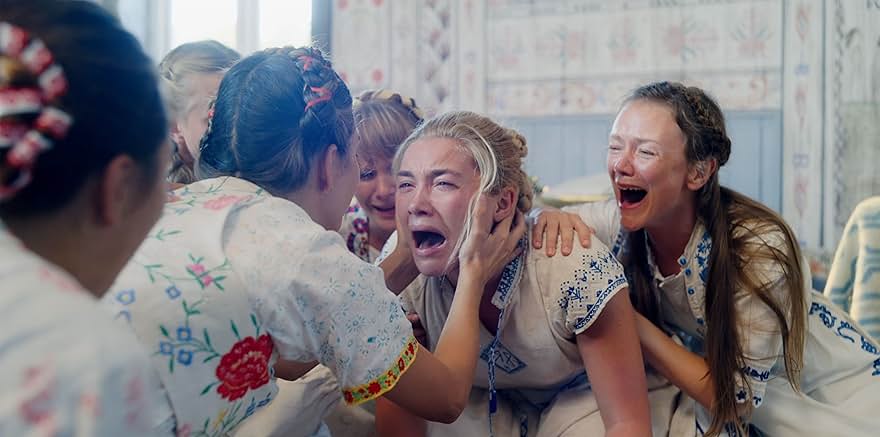
Horror as the sublime
Consequently, our very human appreciation of horror seems to be deeply intertwined with Edmund Burke’s philosophical concept of the sublime10. The sublime is a subjective sensation any person can experience, defined by the strange pleasure we derive from moments of existential terror of bodily destruction by higher powers. The sublime is thus a complex union of pleasure and pain, thrill and fear experienced simultaneously. This is backed up by Michael Atler’s work on “psychological protective frames” in his fascinating book The Dangerous Edge: The Psychology of Excitement11, in which he details that such emotionally-shielding “frames” must always be present in some form for an appreciation of the gruesome. In other words, an individual must feel either physically or emotionally detached from the instance of horror in order to gain any positive experience from it – an experience that is nevertheless accompanied by an instinctive negative response. Any enjoyment of horror films is thus intertwined with a necessary confirmation of physical safety, as well as a healthy emotional distance from the suffering characters.
A divisive genre
Due to polarized views on this morbid genre, we must also consider what factors influence our divided opinions towards horror. Not only do “sensation-seeking”12 personalities prove bigger fans of horror, gender and age also play a crucial role in determining who can truly enjoy horror movies. A classic survey by Tamborini and Stiff (1987)13 in the field of psychological research showed that men, as well as younger people, expressed more amusement at watching horror films than women or older individuals. More interestingly, women and men differ in what they appreciate about horror; while women tend towards horror films that end on a happy note, i.e. a dark force is defeated, men generally lean towards horror that is packed with many abruptly scary moments. Therefore, women may value the cathartic effects of fear more, while men take greater joy in the experience of fear itself.
Moreover, countries with higher GDP per capita have exhibited more pleasure and desire for horror movies than countries with lower income; a 2022 study14 measuring global box-office consumption concluded that individuals from high-income countries disproportionately consumed more horror films. Such behaviors could be explained by the capacity reduction of people’s psychological protective frames through the state of financial instability experienced by low-income individuals. Therefore a person’s situation of financial precarity results in them having less capacity for enjoying horror movies due to the fact that they are already more prone to anxiety and fear as a result of their vulnerable living situation.
United in horror
Though horror can induce us with anxiety and even traumatize us, its appeal is also characterized by its benefits for social bonding and romantic relationships. We can agree, after all, that horror movies are funner when we watch them together. Research15 in social and personality psychology16 suggests that the act of watching a spine-shivering scene together with friends can motivate romantic intimacy and social closeness over the shared emotional rollercoaster and subsequent post-horror relaxation which is allowed by oxytocin and endorphin releases. In this beautiful way, horror allows us a deeper appreciation of life through a confrontation with its opposite; death. What’s more, it is precisely the supernatural elements of the genre that make it so iconic; the presence of unpredictable powers in scary movies – may they be hideous clowns, vampires or zombies – consequently act as symbols of the unknown. And the unknown is not only inherently terrifying but also fascinating through the very mystery it provides.
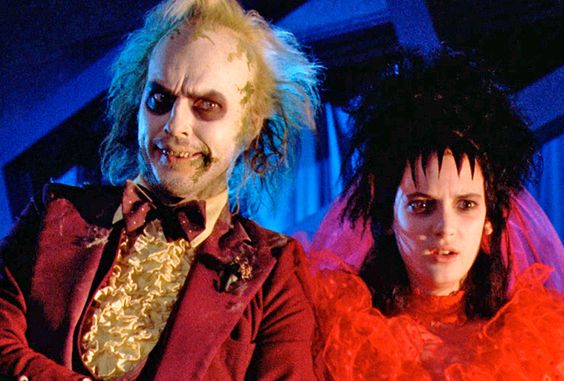
The absurd world of blood, beasts and brutality that frequently accompanies horror films can consequently render them almost amusing at times, further establishing their appeal to us. Looking back at Tim Burton’s cult-horror-classic Beetlejuice (1988)17, we are confronted with a tacky turquoise set in which ordinary objects are possessed by souls, harmless critters are transformed into dangerous monsters and floating organs comedically remind us not to take life too seriously. Perhaps it is the comedic absurdity of the tragic that makes us love horror so. Or maybe it is the fact that it makes us feel something so immediately and so intensely that attracts us to the unforgettable genre.
Written by Anna Hammerich
References
1 Parris, D. (2024, May 15). Why Do People Like Horror Films? A Statistical Analysis. Statsignificant.com; Stat Significant. https://www.statsignificant.com/p/why-do-people-like-horror-films-a
2 Yang, H., & Zhang, K. (2021, October 26). The Psychology Behind Why We Love (or Hate) Horror. Harvard Business Review; Ascend. https://hbr.org/2021/10/the-psychology-behind-why-we-love-or-hate-horror
3 LeWine, H. E. (2024, April 3). Understanding the stress response . Harvard Health; Harvard Health Publishing. https://www.health.harvard.edu/staying-healthy/understanding-the-stress-response
4 Andersen, M. M., Schjoedt, U., Price, H., Rosas, F. E., Scrivner, C., & Clasen, M. (2020). Playing with fear: A field study in recreational horror. Psychological Science, 31(12), 1497–1510. https://doi.org/10.1177/0956797620972116
5 Sima, R. (2022, October 27). Why we like scary things: The science of recreational fear. Washington Post; The Washington Post. https://www.washingtonpost.com/wellness/2022/10/27/why-we-like-scary-things/?
6 Yang, H., & Zhang, K. (2021, October 26). The Psychology Behind Why We Love (or Hate) Horror. Harvard Business Review; Ascend. https://hbr.org/2021/10/the-psychology-behind-why-we-love-or-hate-horror
7 Dargis, M. (2019, July 2). “Midsommar” Review: The Horror of Bad Relationships and Worse Vacations (Published 2019). The New York Times. https://www.nytimes.com/2019/07/02/movies/midsommar-review.html
8 Kelly, S. (2022, January 13). Scream: The psychology of why we love horror movies. BBC Science Focus Magazine. https://www.sciencefocus.com/the-human-body/scream-horror-movies-psychology
9 Liberatore, S. (2023, February 14). Experts reveal why we are obsessed with true crime shows. Mail Online. https://www.dailymail.co.uk/sciencetech/article-11749967/Are-obsessed-true-crime-shows-biological-reason-morbid-curiosity.html
10 Morley, S. (2021, March 22). A Short History of the Sublime. The MIT Press Reader. https://thereader.mitpress.mit.edu/a-short-history-of-the-sublime/
11 Apter, M. J. (1992). The Dangerous Edge: The Psychology of Excitement. Free Press.
12 Zuckerman, M. (2007). Sensation seeking and risky behavior. American Psychological Association. https://doi.org/10.1037/11555-000
13 Tamborini, R., & Stiff, J. (1987). Predictors of Horror Film Attendance and Appeal. Communication Research, 14(4), 415–436. https://doi.org/10.1177/009365087014004003
14 Yang, H., & Zhang, K. (2021a). OUP accepted manuscript. Journal of Consumer Research, 48(5), 904–919. Oxford Academic. https://doi.org/10.1093/jcr/ucab024
15 Taylor, S. E. (2006). Tend and befriend: Biobehavioral bases of affiliation under stress. Current Directions in Psychological Science, 15(6), 273–277. https://doi.org/10.1111/j.1467-8721.2006.00451.x
16 Dutton, D. G., & Aron, A. P. (1974). Some evidence for heightened sexual attraction under conditions of high anxiety. Journal of Personality and Social Psychology, 30(4), 510–517. https://doi.org/10.1037/h0037031
17 Chang, J. (2024, September 6). The Ghoulishly Retro Pleasures of “Beetlejuice Beetlejuice.” The New Yorker; The New Yorker. https://www.newyorker.com/magazine/2024/09/16/beetlejuice-beetlejuice-movie-review
 English
Leave a Reply