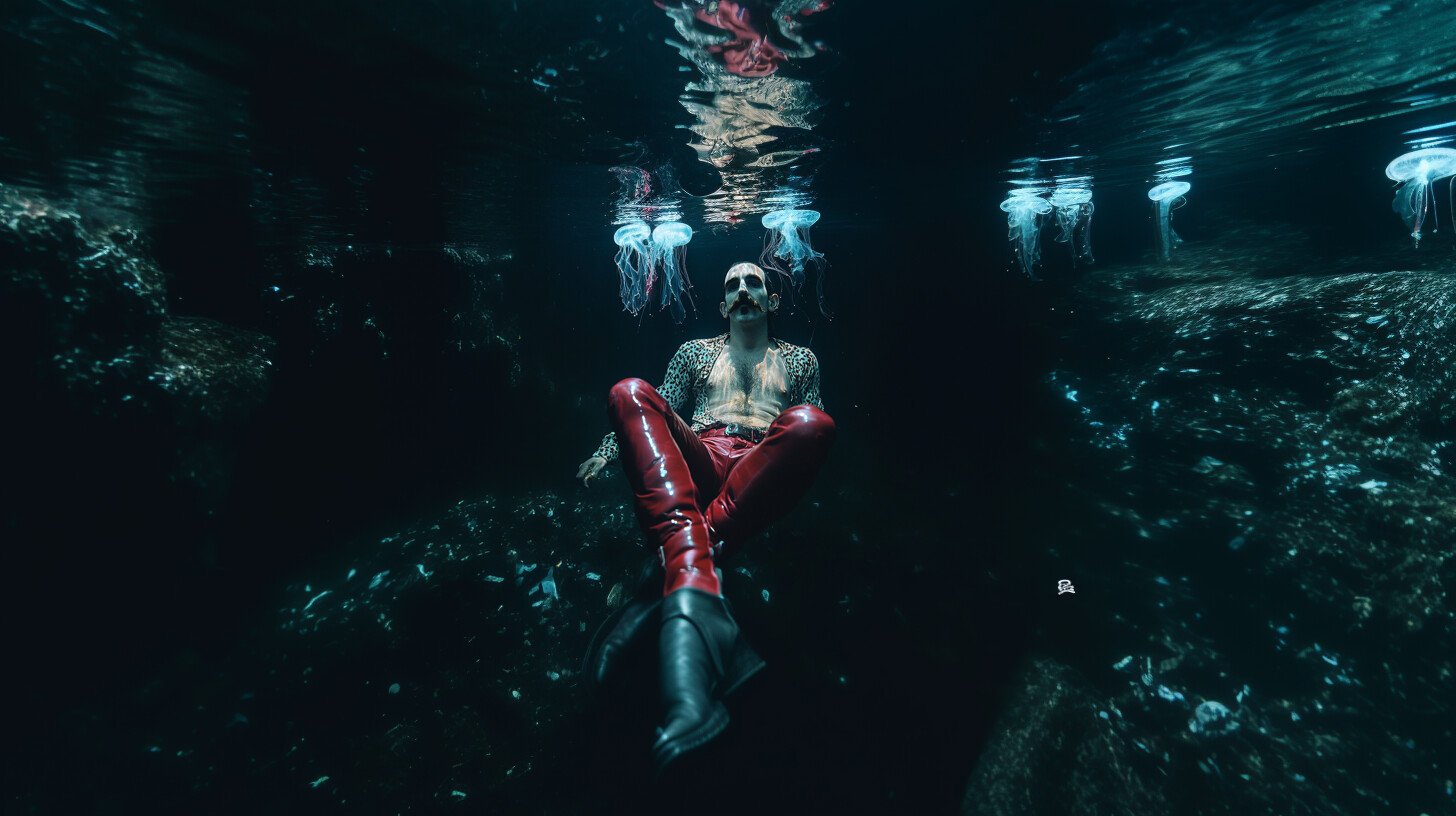
AI in the arts attracts controversy for various reasons, from intellectual property to work opportunities. Independent filmmakers weigh in on their changing industry – with different reactions.
Artificial intelligence (AI) development is an undeniable phenomenon – filmmakers and production companies find themselves faced with new technology promising script analysis, predictions of box-office success, and streamlined post-production. While developers may boast about our new technological future, the change isn’t without backlash – AI in script writing was a central issue cited by Hollywood screenwriters during their 148-day strike in 2023.
A Step Backwards for Film?
For Anna Benner (director of Chicken, winner of Best European Independent Animation at ÉCU’s 2025 festival), an artist and filmmaker based in Berlin, most of her work uses rotoscope imagery. Rotoscoping is an animation technique, where live footage is drawn over frame-by-frame to reproduce realistic movement. While Benner relies heavily on digitized processes, usually Photoshop or Procreate (“it’s just a lot faster,” she explained), she takes pride in her meticulously multilayered, hand-drawn frames.
Benner is wary of generative AI: “I find it ridiculous that we are destroying our environment in order to create.” While some concerns are personal, others are rooted in larger societal questions. “I’m also very uncomfortable with the copyright issues for the datasets that the machines get trained on. The artists and creators just don’t get asked for their consent. Then the output that gets put out is … well, you can say that it’s going to get better, and maybe it will get better.”
“My personal bugbear is that I think the general public gets trained to see imagery as computer-generated, so the discernment of images gets lower and lower,” Benner said. “I don’t really understand why anybody would want to use (AI) to make something about the world, unless they’re saying something about the world as the world with technology. I find it difficult to imagine someone who has a story or a topic that they are burning for and that they want to connect to other people about then thinking ‘but I’m not going to do it myself, I’m going to make a machine to come up with my images’,” she reflected. “Maybe I’m old-fashioned that way.”

Behind the Scenes
New editing technology promises to transform the post-production process. For head editor Antoine Vareille, who has worked on projects like Chien et Chat (2024), Alibi.com 2 (2023), and Brice de Nice (2005), he believes that artificial intelligence will make his role more important. “I think we’ll spend more and more time with the director rethinking the film, reshooting with AI stuff that we feel are missing.”
“AI is definitely going to – I wouldn’t say take over, but it’s going to accompany the creation of films”, Vareille speculated. I think it’s going to make the editing process more important. During the shooting, sometimes people used to say, ‘we’ll fix it with VFX, with visual effects.’ I think they’re going to start saying, ‘We’ll AI that’.”
“It will be a different cinema. There might even be a day where people will like that look, the artificial intelligence look, where they will ask for it,” he said. “For example, I see my kids listening to music, and they listen to a lot of music with auto-tune. They don’t like the way people sing; they find it old-fashioned. I have a feeling people will like the AI look very quickly.”
Vareille sees access to new technology as having equalizing potential. “There are going to be lots of people who will have the tools to do on their own computer full feature films and see great films coming out of these people that didn’t have the access or the opportunities”, he said. “We’ll have new forms of cinema and new films and new ideas.”
He also remarks on an evolving audience. “The audience looks at films in a more savvy way. They’re very particular about films, about cinema, and they understand editing much better. They can analyze a lot of shots much faster than my parents used to.” He notes however that many technical shortcomings remain with artificial intelligence, especially when reworking images.
An Experiment in Progress?
Some other filmmakers don’t see artificial intelligence as negative, but rather a new tool to experiment with. Oliver Conrad, for example, used generative AI as the backbone for the music video Le Bain (by MITCHUM). Le Bain (part of ÉCU 2025’s Official Selection) was not Conrad’s first project using generative AI; he had done a previous project with artificial intelligence (“in its earlier days”), but remarks a striking difference in capacity since then.
“I built the concept around the restrictions that the tool gave me at the time”, he said about Le Bain. “You couldn’t get any consistency in terms of the people in the video. Every shot would look differently. So then I just thought – okay, fine. I’ll just focus on him having a mustache. So you recognize the mustache but if it’s not the same guy, nobody really cares. You get the idea that the mustache guy, it’s him, even if it’s a mermaid, or an animal, or whatever.”

Conrad explained that he leaned into the whimsical aspect of unpredictability, but that may not be suited for all projects. “It felt like you’re dealing with a toddler of some sort – you try to tell him what to do, but then he sometimes does something completely different, but it’s actually quite cute and nice”. He described the creative process as a collaboration: “It was like learning, getting to know each other.”
The Limits of Technology
In terms of employment consequences, it remains early to tell. “It definitely impacts it and it will take away a lot of jobs, but I think it will also add probably a bunch of jobs or at least democratize storytelling,” Conrad speculated. Benner believes that AI has already become a formidable threat to employment in the industry. However, she remains undecided about its merit for up-and-coming filmmakers. “I mean, that’s something everybody has to decide for themselves where their line is, right? And if you want to collaborate with a machine, maybe it’s ok. I don’t know.”
“I’m always surprised how many people haven’t engaged with the ethics of it or with the problematic aspects of it,” Benner mused. “Within animation, there’s a lot of resistance to it. I think that’s a good thing – I’m very happy that we are in the majority, specifically in the artistic field.” Conrad is less concerned about its integration into filmmaking, likening it to the introduction of CGI. “I feel like you should be able to do what you want with it, as long as you don’t cause any harm, and as long as you’re honest that it’s AI generated.”
Despite seemingly opposing stances, there’s an agreement that artificial intelligence has its limits. “I feel like storytelling is the most important thing of all”, Conrad says. “I don’t see how AI is going to take over that step. It can give you inputs, it can maybe generate some dialogue, but it still feels a little bit … I don’t know, fake in a way, or maybe too perfect in a way. I’d rather watch something shot on an iPhone or an 8mm camera by a person trying to tell a story.”
As artificial intelligence comes into the mainstream – can it ever really be considered an adequate replacement for human creativity?
*Responses have been edited for clarity.
 English
Leave a Reply