Written by Chiara De Liberti
For the past few weeks, social media has been flooded with the new “Back to 2016” trend—an ode to nostalgia and to the desire to retreat into what we can consider a refuge year. Faced with rapidly evolving technologies and artificial intelligence poised to conquer every domain, more and more people are longing for a time when algorithms were not a pressing topic and social media was still an intimate space. Much like independent cinema.
2016 was the year when cinema stopped trying to look “indie” and simply… existed everywhere. It wasn’t just a good year for independent film—it was the moment when indie sensibilities overtook cinema itself. In this wave, ÉCU becomes the natural space that breathes this energy, a bridge for emerging voices and for the spread of a nonconformist cinema that leaves room for narrative experimentation.
For the first time, indie films took center stage on the festival circuit, going on to win Oscars and Palmes d’Or while still remaining in the shadows—distant from the masses and far removed from the logic of blockbusters. One such example is Moonlight, which won Best Picture on a $1.5 million budget, or Manchester by the Sea, which dominated awards season while remaining deeply quiet and resolutely anti-spectacle. Independence wasn’t about obscurity, it was about creative control.
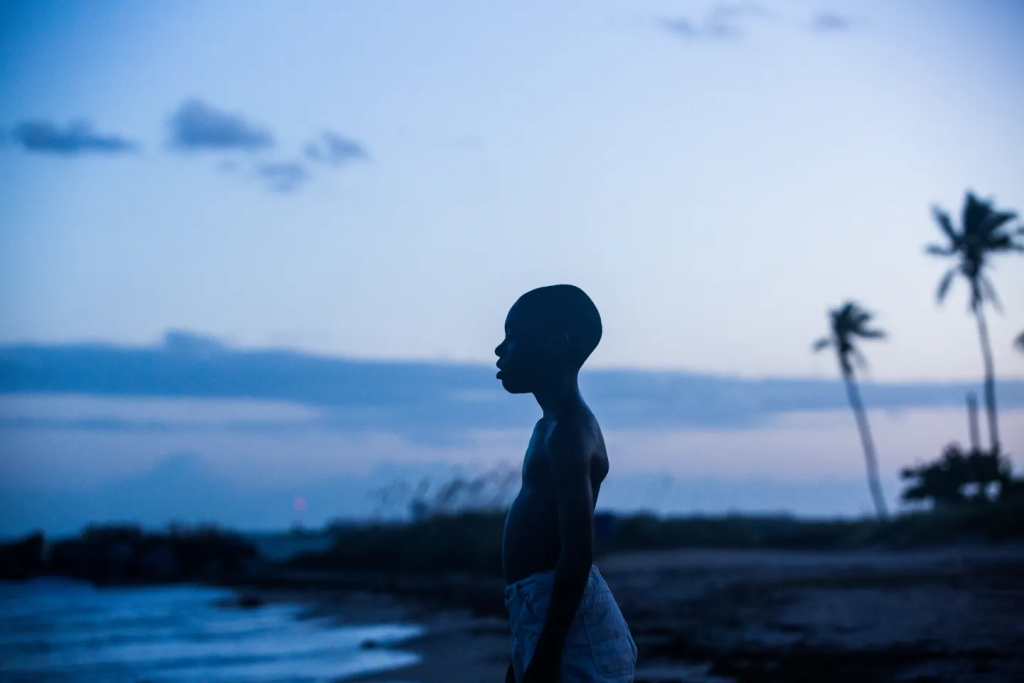
Moonlight, Barry Jenkins, 2016
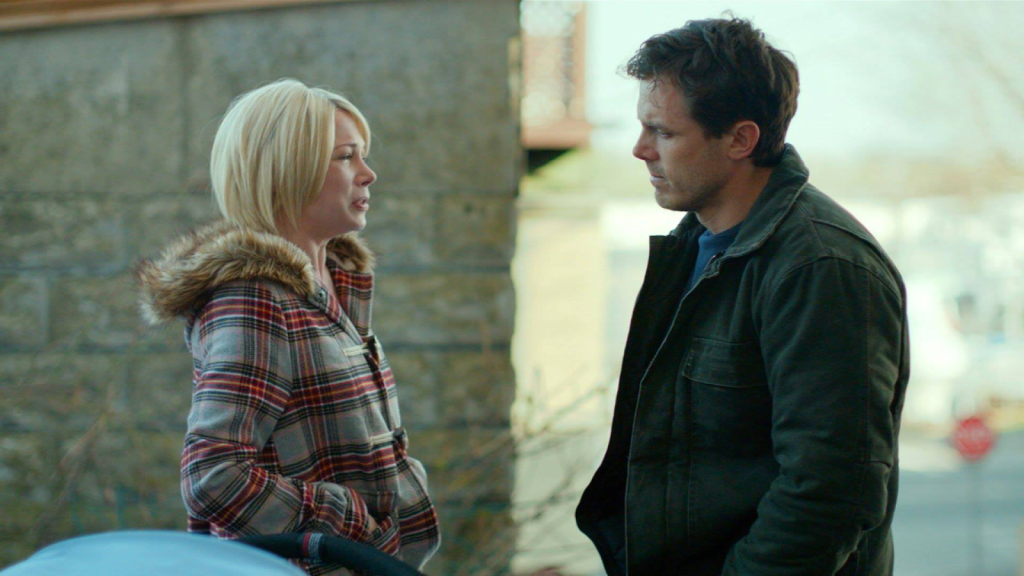
Manchester by the sea, Kenneth Lonergan, 2016
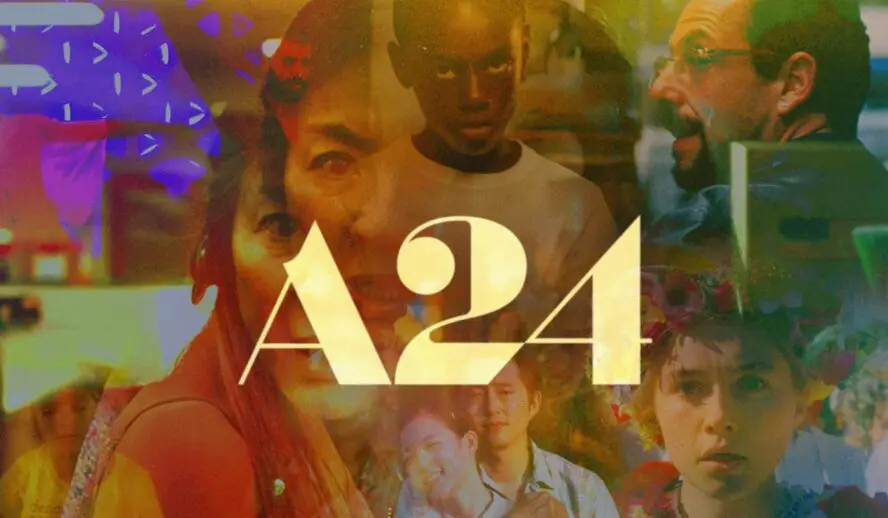
On an industry level, this period also marked the rise of A24, which became a cultural tastemaker rather than merely a distributor, successfully carrying independent cinema into the realm of pop culture. The concept was about giving life to new voices not new franchises and this helps explain why 2016 felt like a last “pure” indie moment before algorithms took over.
From a socio-economic perspective, it is also important to highlight another aspect: the political unconscious of 2016—that is, the ability to address sensitive themes without making them obvious or positioning them as the explicit core of the narrative. Many films were not overtly political, yet they felt political, for example Moonlight, that allowed issues of race, toxic masculinity and queerness; or American Honey on the economic precarity in America. Similarly, Toby Fell Holden directed Balcony—winner of the 2016 edition of the ÉCU Film Festival among many others —in which the story revolves around a local girl who falls for a recent immigrant who becomes the victim of prejudice and shame in a neighborhood rife with racial tension. A sharp, aggressive short film that confronts audiences with boldness and a deliberate intent to shock.
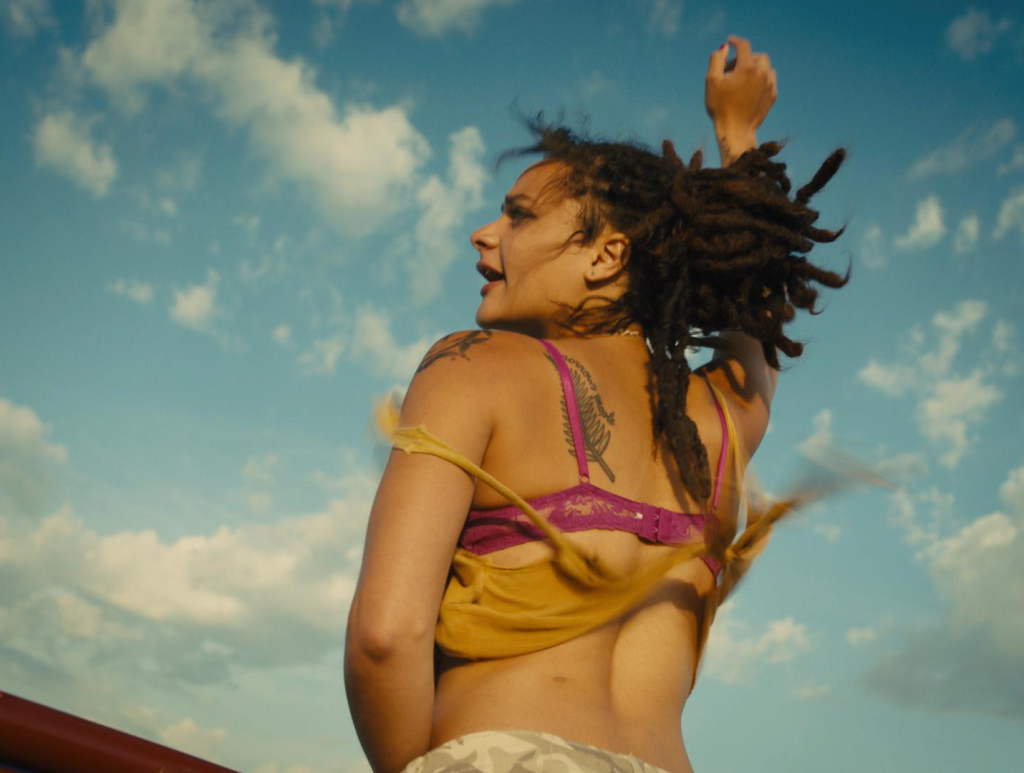
American Honey, Andrea Arnold, 2016
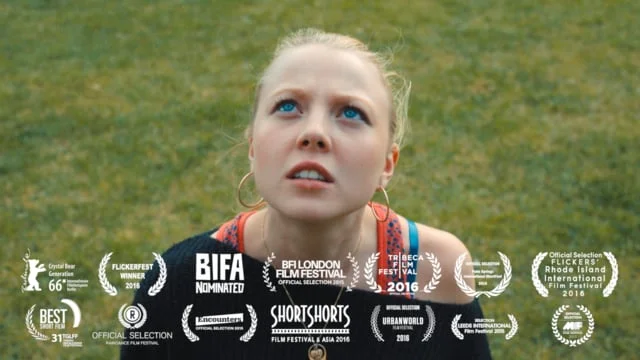
Balcony, Toby Fell Holden, 2016
But the true peculiarity—what makes this cinema unique—is the emotional realism. Indie cinema in 2016 trusted audiences to sit with discomfort. There was no fear of portraying human emotions while creating a space for intimacy and understanding. An iconic language that defines the aesthetics of independence: indeed visually and structurally, indie movies share the same traits—natural lighting, diegetic music, long takes, and stories that end quietly, emotionally, rather than narratively.
There is a particular film that embodied the theme of innocence and cruelty, projecting onto the screen a stark spectrum: life and death, human beings and animals. I am referring to The Chicken, a short film by Una Gunjak from Croatia, winner of the ÉCU Award for Best European Independent Film of the Year in 2016. It is proof that making an independent film worthy of the name requires courage; not everyone has the expressive ability to tackle unusual topics such as the killing of a chicken given to a little girl as a reflection on freedom.
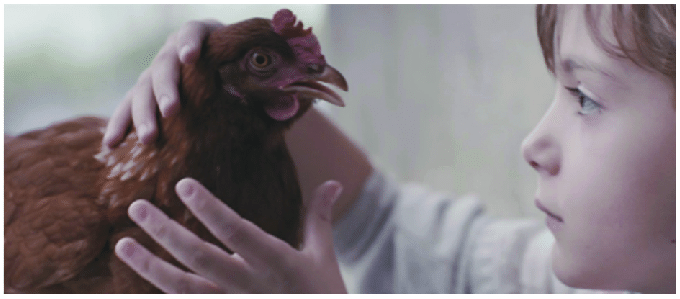
The chicken, Una Gunjak, 2016
We can confidently say that ÉCU films show a continuity with the spirit of that time, highlighting recognizable values such as risk and identity. As the final independent work from 2016, I have chosen to mention Horseface by Marc Martínez Jordán, as it pursues an intimate and uncompromising form of storytelling, relying more on atmosphere than on traditional plot. As the viewing begins, we may feel disoriented and unsettled: there is only a man with a horse’s face and an unsettling grandmother who lives with him. But the reality is quite different—its unexpected ending leaves the viewer both destabilized and deeply moved. The choice of black and white and the framing rich in close-ups make it a successful experimental short film, blending horror and drama.
As Marc Martínez Jordán enthusiastically explained in our recent conversation, he looks at his narrative form as an “Act of freedom in a very unconscious way”. He never cared about the money of Hollywood Industry, he attended a film school that did nothing but impose rules on how to make a great film, but his desire was only to make his own films, to tell the truth, closed in his ampoule of creativity. As he reveals:
“They wanted me to follow the Hollywood mentality, but what if I choose the opposite? Instead of directing true actors, I put a mask on them or just pick my musa, my grandmother; instead of buying an expensive camera, I just borrow the Nikon from my neighbor.”
His creative process was certainly inspired by other works such as Christopher Nolan’s Memento, but in his opinion what he tried to create was the fruit of a series of elaborations and visions that he put in a thermomix, that’s why it is shown in one scene of the film. Nothing left to chance!
When I asked him his opinion on the differences between indie cinema in 2016 compared to now, he showed me a very sincere vision:
“I think there is a new indie wave merging with a new sensitivity and in this wake there is a better chance for young female directors to make their voices heard, whereas 10 years ago it was more difficult.”
An objective point of view that should not be underestimated.
In the end of our brightening conversation, Marc Martinez shared some advice to young filmmakers working in independent cinema today:
“Every director needs to go through a period of life experience. You don’t get techniques by stepping out of your house, still you have to live. Your creative capacities go in hand with your life adventures. Travels, dramas and loss, really can shape you. I think at least, I am still in process.”
He concludes with humility and hope in his voice saying that today everyone can make movies, even AI, what matters is the point of view that you desire to communicate, finding your eye.
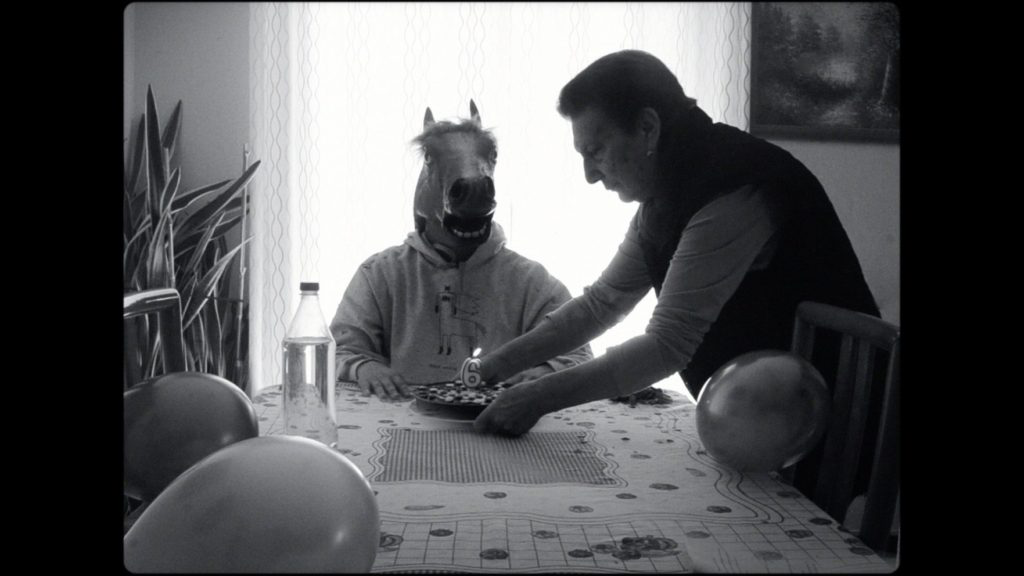
Horseface, Marc Martinez Jordán, 2016
The final question is: why does this return to the past matter so much today?
“Back to 2016” is not regressive; it is a call for a more human kind of cinema, not in terms of budget but as a permission to be honest. In the frenzy of our everyday routines, we keep running faster and faster, yet the destination always feels one step further away. I genuinely believe this is not just another trend destined to fade beneath millions of views; it represents a deep desire to reconnect with our emotions. A desire that only independent cinema will continue to fulfill.
 English
Leave a Reply