Taking a closer look at: Arjan Brentjes, Reza Daghagh, Tino Salehi, Katharina Sporrer, Hanife Sylejmani, Myriam Garcia Marienstras and Olaf Taranczewski
Written by Pia Stoffers
At the end of April, we once again had a very special highlight on our calendar: the European Independent Film Festival. This year, we had the opportunity to present some of the most exciting works from the international indie film scene. Each project was unique in its own way—and that’s exactly what made the festival so special. We look back with gratitude on an unforgettable weekend full of creative energy.
From screenings and special selections to panel discussions, workshops, Q&As, the award ceremony, and legendary after-parties—the festival program had a lot to offer and kept us entertained all weekend.
Today, we’re taking a closer look at five of the 26 award winners and learning more about what inspired them to create their projects. The lineup includes animated and AI films, outstanding acting performances, and the winner of the Best Filmmaker Award.
Time for a peek behind the scenes! You might even discover your next favorite film. Don’t miss it!
Award Winner for Europe’s Best Independent Animation 2026
Let’s start with a film that addresses moral conflicts that are on many people’s minds—especially today. Freedom skillfully combines current social issues with a visual aesthetic reminiscent of times past, thereby offering a thought-provoking perspective on our present and possible future. With its storyline and central theme of freedom, the film poses profound questions: What is even worth protecting under fascist rule? And how far would one go to preserve exactly that?
For this impressive approach, the film received our Award for Europe’s Best Independent Animation at ÉCU 2026.
ARJAN BRENTJES – FREEDOM
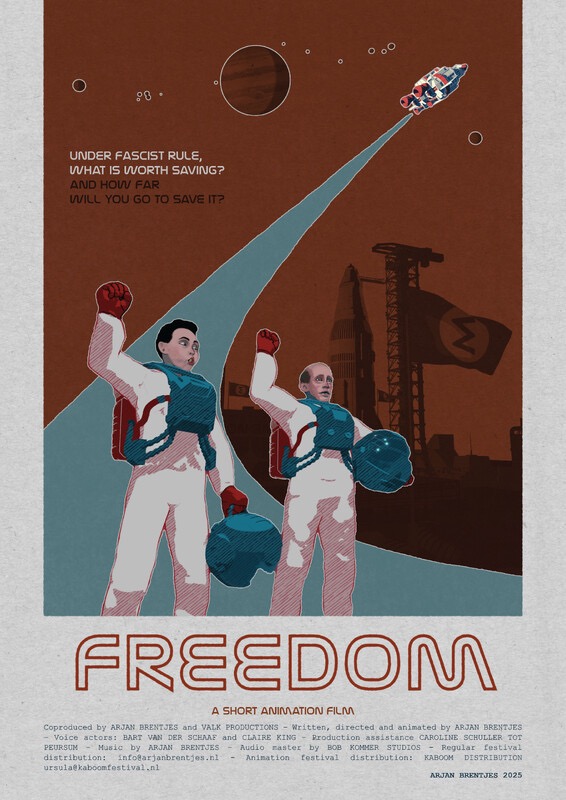
Here’s what Freedom is about: Two astronauts try to rescue forbidden art treasures from a totalitarian regime by smuggling them on their mission to Jupiter. During their long space journey they then encounter some mutual disagreements.
Arjan Brentjes, based in the Netherlands, is the creator of this fascinating animated film. He began his professional career as a painter before dedicating to moving images in 2008. Since 2010, he has devoted himself to producing short films—in recent years primarily in the field of animation, as is the case with this year’s award winning short Freedom.
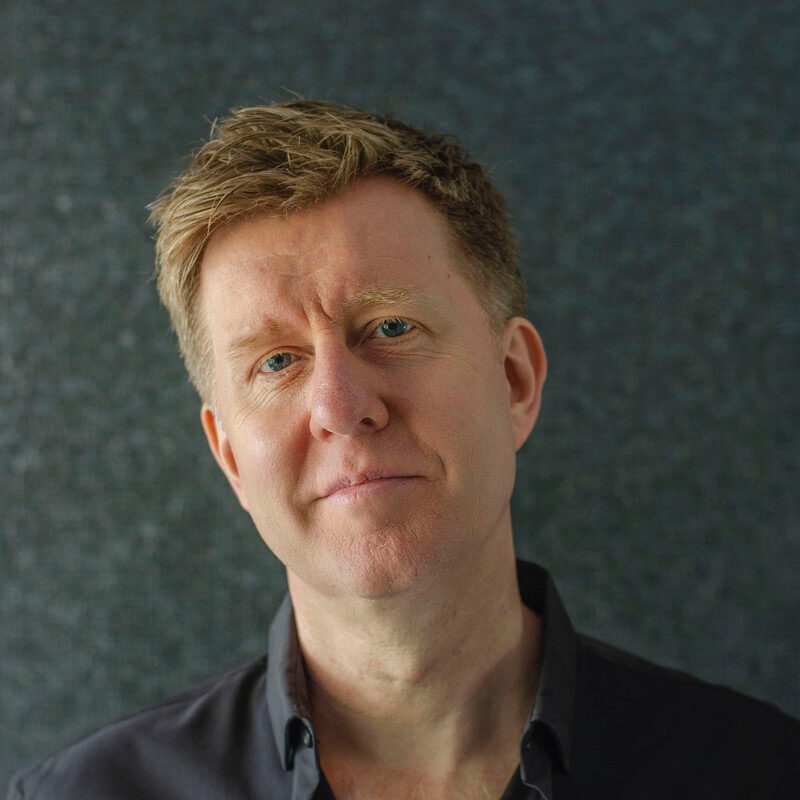
Brentjes is one of those filmmakers who knows how to comment on the development of our technological society and human hubris with subtle irony and humor. In doing so, he takes the audience on a journey that deliberately evokes nostalgia and familiarity, while pursuing a visual approach that plays with stylistic elements from past decades. Through calculated time jumps, he establishes a temporal distance from the present that fosters a more reflective and objective perspective through which to examine contemporary social issues.

With Freedom, Brentjes has produced a short film that addresses the problem of a growing global trend toward authoritarian structures. Through his animation, he deliberately alludes to these developments, conveying the central message that social and political dynamics are timeless. At the same time, the film encourages viewers to critically question human hubris.
“My plans for a larger project hit a lengthy hiatus. Since I can’t stay idle, I started a smaller, no-budget project. On one hand I wanted to address the rising tide of authoritarianism. But on the other, I also chose to create a comedy, to keep things bearable for myself in these dark times. Whether those two elements can coexist is for the viewers to judge.”
We are excited to see what Arjan Brentjes will bring to the screen next!
Award Winner for Best Actor 2026
The next film, Too Far, Too Late by Reza Daghagh, deserves special recognition. Not only for its narrative structure, which unfolds in the spaces between words, gestures, and silence, but also because it builds tension not so much through external events as through what remains unspoken. Within just 15 minutes, this film and the performance of Tino Salehi as Morteza, leaves a lasting impression on both audience and jury. At ÉCU 2026, Salehi received an award as the Best Actor. Let’s dive deeper into Too Far, Too Late together!
TINO SALEHI IN TOO FAR, TOO LATE (REZA DAGHAGH)

During a short drive between two nearby cities to find medicine, Morteza receives news that changes everything. He chooses not to tell his father and lets the journey continue as planned. Inside the car, silence grows heavy as old tensions and quiet memories surface. With every passing mile, hiding the truth becomes harder, and Morteza must face the moment when love and honesty can no longer stay apart.
A film like Too Far, Too Late, realized with such clarity of vision, is truly commendable and well deserving of recognition. But who is the creative force behind this masterpiece? Reza Daghagh, born in Iran, is a filmmaker and editor based in Tehran. Having graduated in Cinema in 2012, he has since built his career as an editor across short films, feature films, and documentaries.
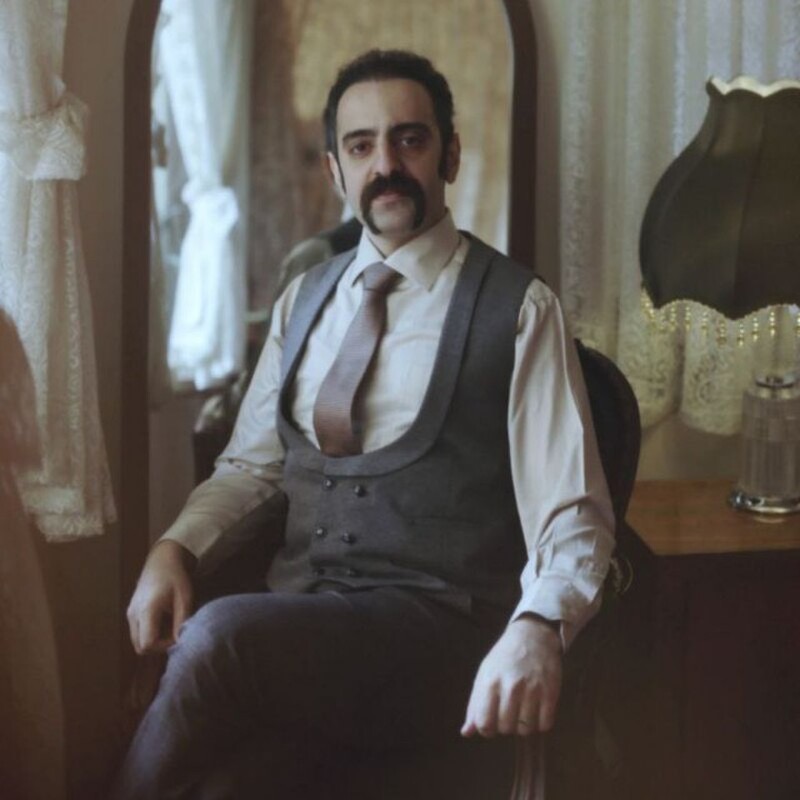
Reza’s work explores human relationships—particularly within families—placed under moral pressure and in situations of crisis. Whether shaped by loss, displacement, or unresolved violence, his stories focus on how ordinary people are confronted with difficult choices when family bonds are put to the test. His short film Middle Eastern Stories: Father (2022) received international acknowledgement.
He explains that Too Far, Too Late is deeply rooted in personal experience, but not in memory itself and does not aim to explain grief in a direct way. Instead, the film lets it emerge through behavior, time, and restraint.
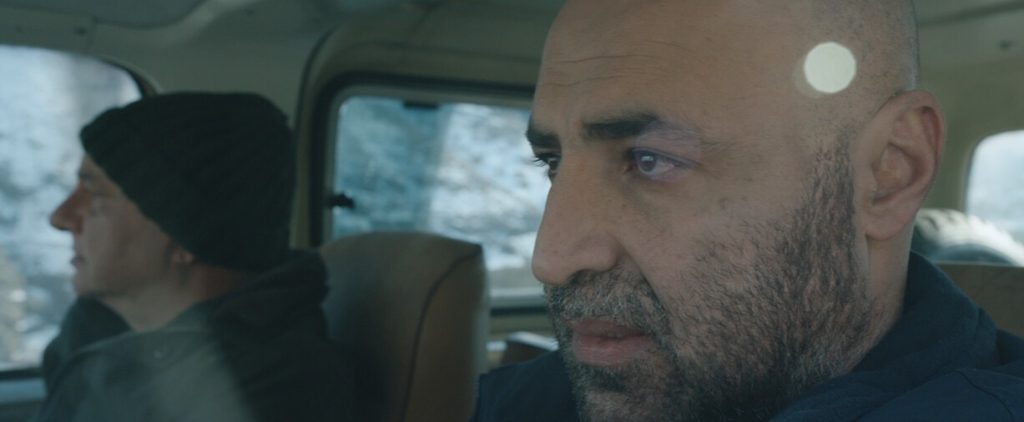
Tino Salehi portrays the role of Morteza, a character who lends emotional depth to Too Far Too Late. Particularly noteworthy is his ability to convey inner tension solely through facial expressions, body language, and even in moments of silence. Torn between love and truth, Morteza exists in a constant state of emotional conflict. Salehi manages to sustain these opposing struggles simultaneously without resolving them too soon. It is no surprise that he was awarded Best Actor at this year’s festival!
So, don´t miss either the film or Salehi’s remarkable performance.
Award Winner for Best Actress 2026
Of course, the 2026 Best Actress Award could not be missing from our festival. The title goes to Hanife Sylejmani, who plays the lead role in the short film Teresa, Station B directed by Katharina Sporrer. The film addresses socially relevant issues and builds a powerful bridge between motherhood, empathy, and human connection in moments of vulnerability, illness, and crisis. At the same time, it highlights the structural and societal pressures placed on women, particularly in their roles as mothers and nurses.
HANIFE SYLEJMANI IN TERESA, STATION B (KATHARINA SPORRER)
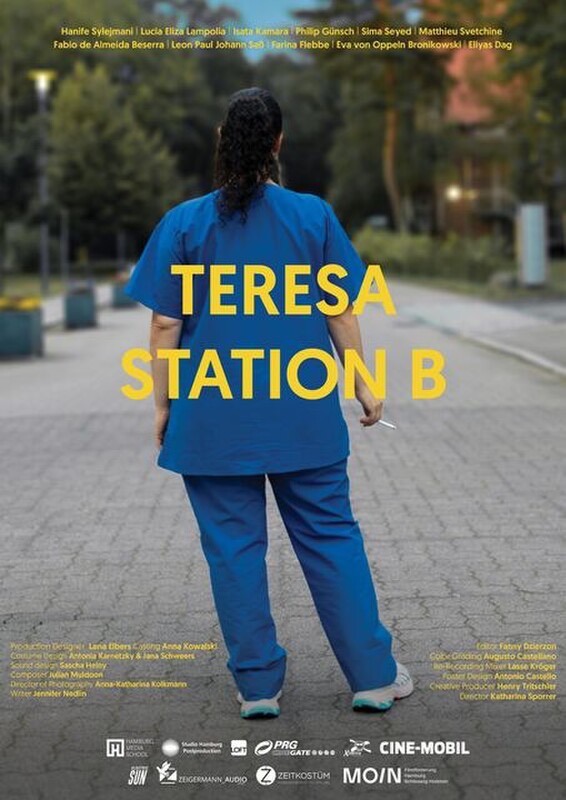
Teresa, Station B tells the story of a nurse named Teresa. We follow her day between the imminent tragedy of her shift at the hospital, and the responsibilities as a mother being tested under the pressure of her ex-husband.
Katharina Sporrer, daughter of a Bulgarian and an Austrian, grew up between Vienna and New York. She studied film and literature at the University of Vienna and acted under Ivana Chubbuck and in The Groundings in Los Angeles. After she completed the HFF script workshop Munich in 2021 she realized that her heart beats for directing, because that’s the only way she can tell stories in their entirety on film and incorporate everything she has previously learned. All of her work is united by a passion for storytelling. With this background, Sporrer created Teresa, Station B — and with remarkable success.
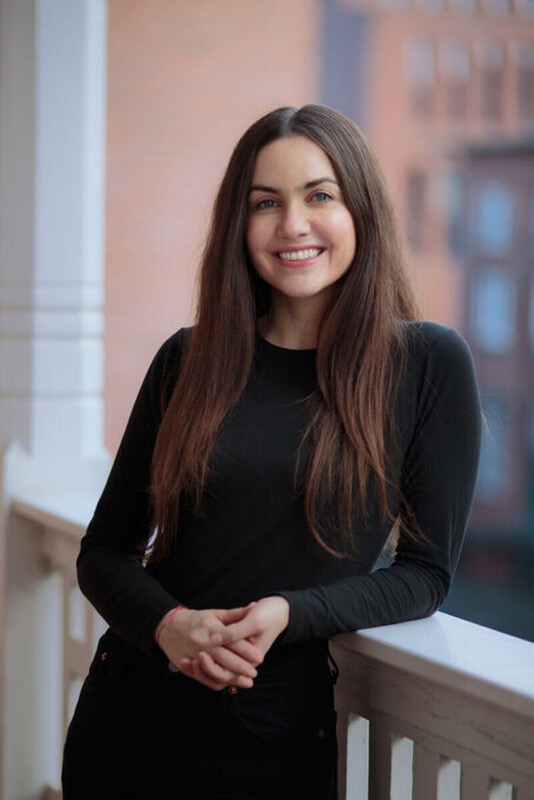
But how did the film come about and why did Katharina choose such an important topic?
Teresa is irreplaceable — at home with her children and in the hospital with the patients. It is this constant balancing act between private and professional life, in which her importance constantly dominates. Katharina Sporrer aims to follow the protagonist through a single day, immersing the audience in a profession marked by unpredictability and constant pressure to perform at its limits. Within the microcosm of the hospital — a place where vulnerability is most visible — the short film also reveals the people who care for us in our weakest moments: often with migrant backgrounds. Set against a backdrop of political tension and growing xenophobia, this reality gains particular urgency.
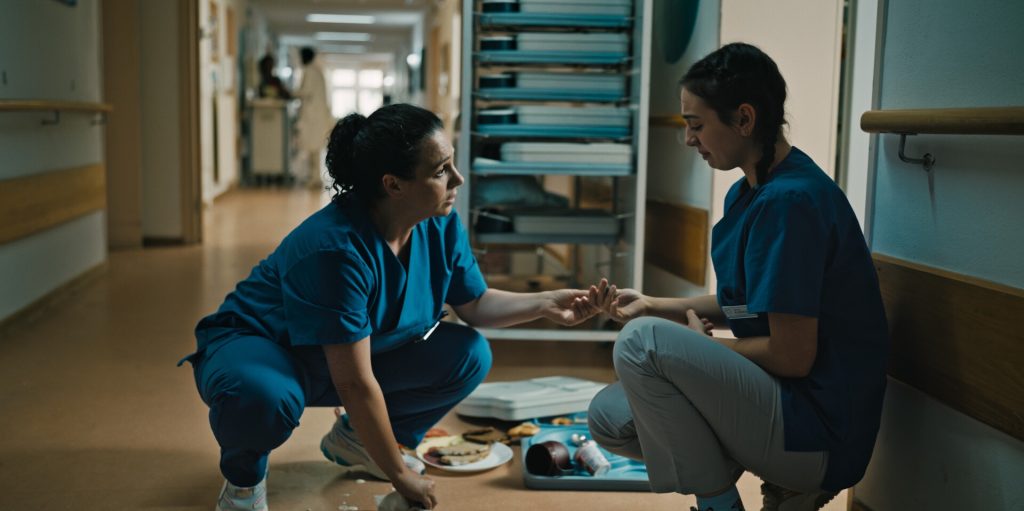
Teresa, Station B should not glorify the heroic story of the nursing staff post-Covid, but one touching insight into the life of a mother who is trying to survive the professions of our society in one of the most important ways, in order care for her child, meet impossible demands, and repeatedly reaching her limits, yet continuing nonetheless. Because we as a society depend on her.
“This is absolutely not a romantic comedy — it’s a slice-of-life story about a nurse’s day. It’s about motherhood, empathy, and humanity, and my aim was to portray that world as authentically as possible. During my research, I spent two days in a hospital assisting a nurse, which became one of the most meaningful experiences I’ve ever had. It revealed to me something deeply noble about this profession.”
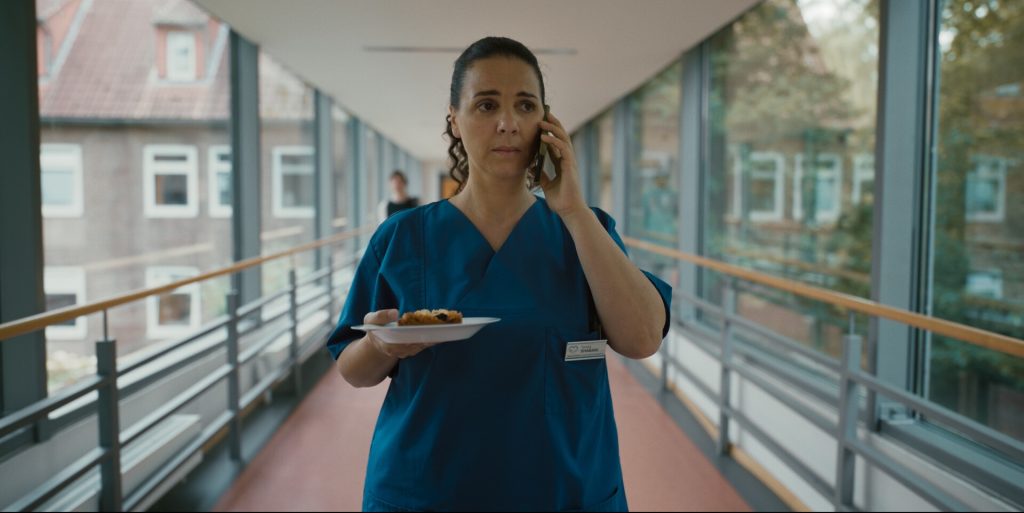
Hanife Sylejmani’s performance strengthens the message at the core of Katharina Sporrer’s short film Teresa, Station B. The short film shows how demanding it is to be a single mother with a migrant background while also working in a hospital. Balancing caregiving, work, and private life is not something that can be managed easily — it constantly stretches the character to her limits and points to deeper structural problems. Sylejmani makes these pressures feel immediate and real, allowing the audience to experience exactly what Sporrer sets out to show: an honest, intimate portrait of a mother living under constant strain, yet still continuing to move forward.
“The film is dedicated to nurses and mothers, and I hope audiences feel close to the protagonist and her lived experience.”
Award Winner for Best Director 2026
Let´s move on to An Excess Baggage, a film created by award winning director Myriam Garcia Marienstras that is about a woman who loves too much, and carries more than she can hold. At its core, it is the story of a mother and her daughter, bound by an intense, almost wordless connection.
MYRIAM GARCIA MARIENSTRAS – AN EXCESS BAGGAGE
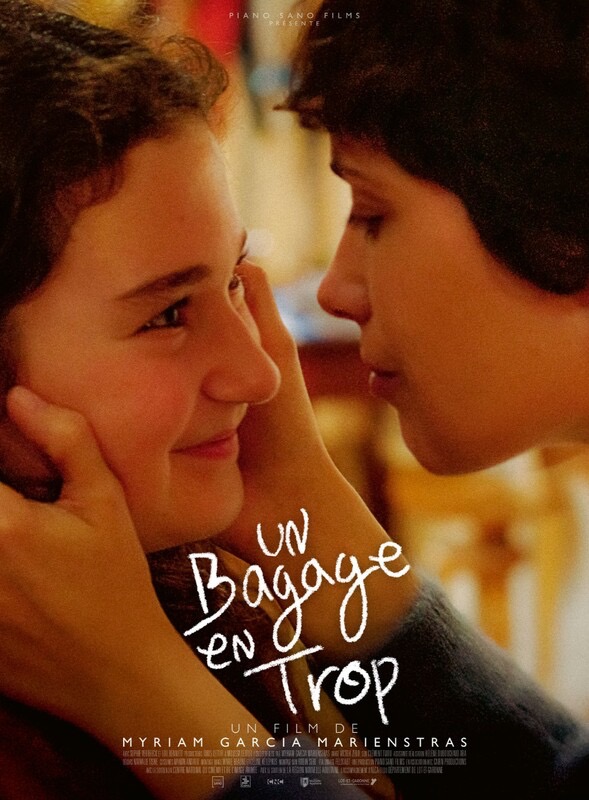
Sophie hides her unease within the intense bond she shares with her daughter, Lila. When Lila leaves for summer camp, Sophie finds herself alone for the first time, overwhelmed by separation and emotional dependency. As the day unfolds, she drifts through encounters and small gestures, trying awkwardly to fill the void. An Excess Baggage portrays a woman whose love, though sincere, becomes too heavy to carry.
Myriam Garcia Marienstras is a French writer and director. Her work explores intimacy, emotional dependency and fragile human relationships, focusing on moments of imbalance, silence and vulnerability. She is particularly interested in characters who love intensely, often clumsily, and struggle to find their place within close bonds.
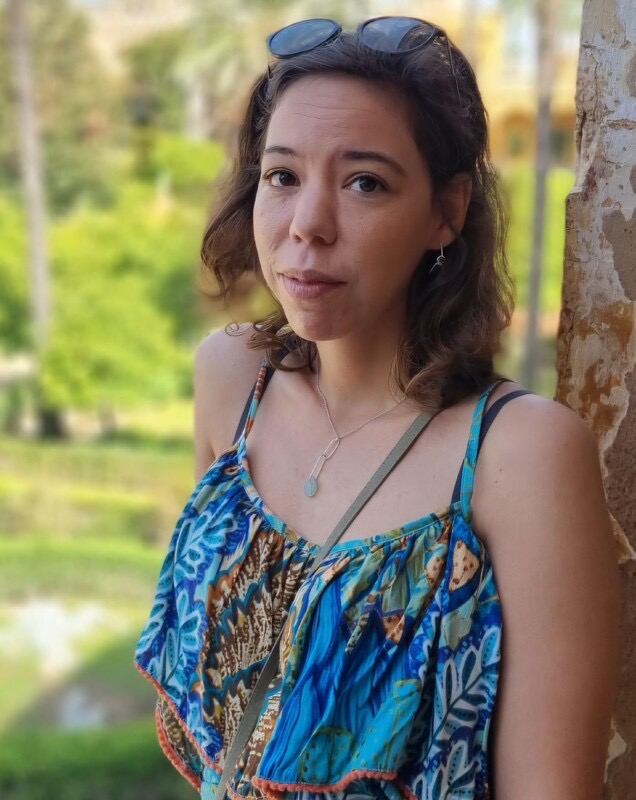
“I wanted to explore emotional dependency not as something spectacular, but as something quiet and fragile — something that shows itself in glances, silences, small gestures that fail. The film observes a woman at the moment when love becomes overwhelming, when care turns into clumsiness, and when separation feels unbearable. Rather than explaining her pain, I chose to let it appear on her face, in what she cannot say.”
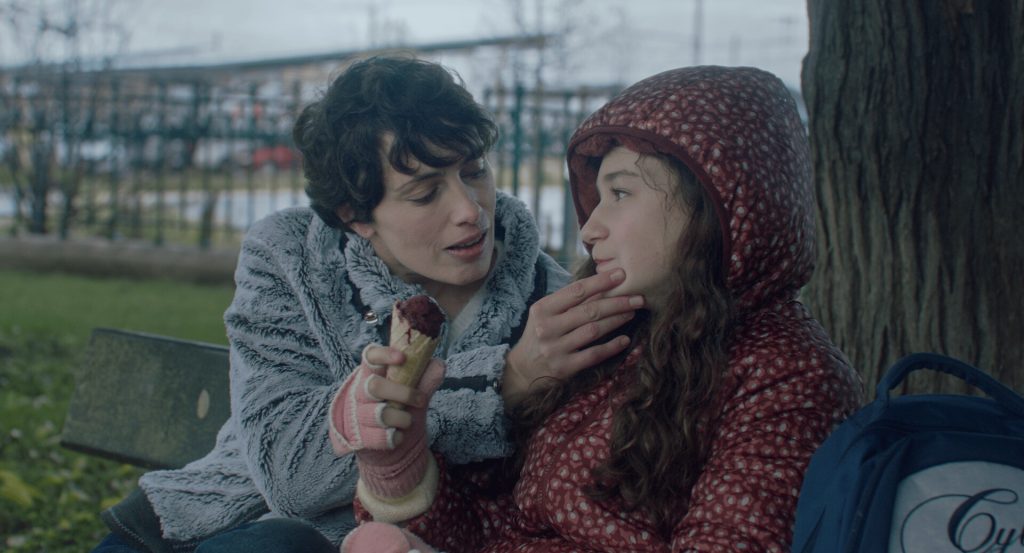
An Excess Baggage, shot in just six days, is her first short film, and it has been selected and awarded internationally, screening at festivals in Europe, the United Kingdom, the United States and beyond, including BAFTA- and BIFA-qualifying festivals, and receiving awards for Best Short Film and Best First-Time Director. At ÉCU she received the Award for Best Director 2026!
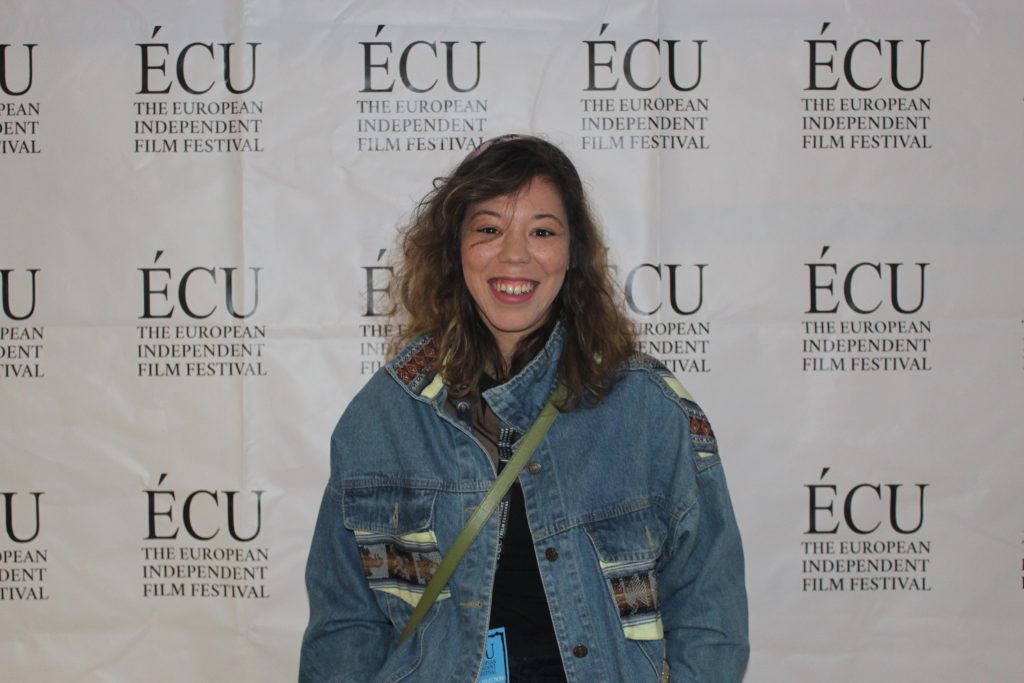
But how did the film come about?
Myriam explains to us that her own experiences and family background inspired her to make the film, highlighting how much personal commitment and emotion often shape independent cinema.
“I started from a central image of a daughter going to summer camp while her mother breaks down in tears. From there, I developed the film, drawing partly on my own relationship with my mother. I wanted to explore emotional dependency in a broader sense, without reducing the character to a specific diagnosis or case.”
Currently, she is developing three new short films in production with Sans Regret Productions and Cobalt Films, as well as a feature-length project in development. Through her films, she continues to explore intimate narratives centered on female characters, where emotions surface through gestures, silences and restrained tension.
Award Winner for Best Artificial Intelligence (AI) Film 2026
The independent film scene has even more to offer: a new category introduced for the first time this year! The Hum, an award-winning piece by Olaf Taranczewski that stands out in its own way. It received the Best Artificial Intelligence Award at ÉCU 2026 — and deservedly so.
OLAF TARANCZEWSKI – THE HUM
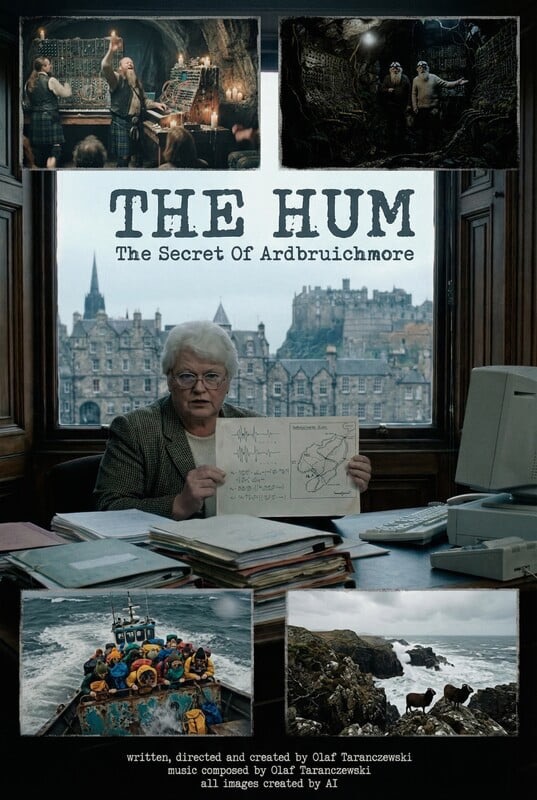
Here’s what The Hum is about: The Secret of Ardbruichmore is a hauntingly offbeat mockumentary where sound becomes ritual… and silence is never guaranteed. On a remote Scottish island, a mysterious festival pulses beneath the earth. Deep within limestone caves, locals gather to operate massive synthesizers, creating a sound said to transcend reality itself. But when tragedy strikes, the harmony begins to fracture, exposing tensions between tradition, truth, and the cost of devotion.
The Hum is the first official short film by Olaf Taranczewski, who is a German-Polish classically trained pianist, composer, and professor known for his genre-bending work in jazz, electronic, and film music, often incorporating prepared piano and synthesizers, with numerous award-winning film scores and collaborations across various creative fields, including teaching jazz/pop production at the Trossingen University of Music.
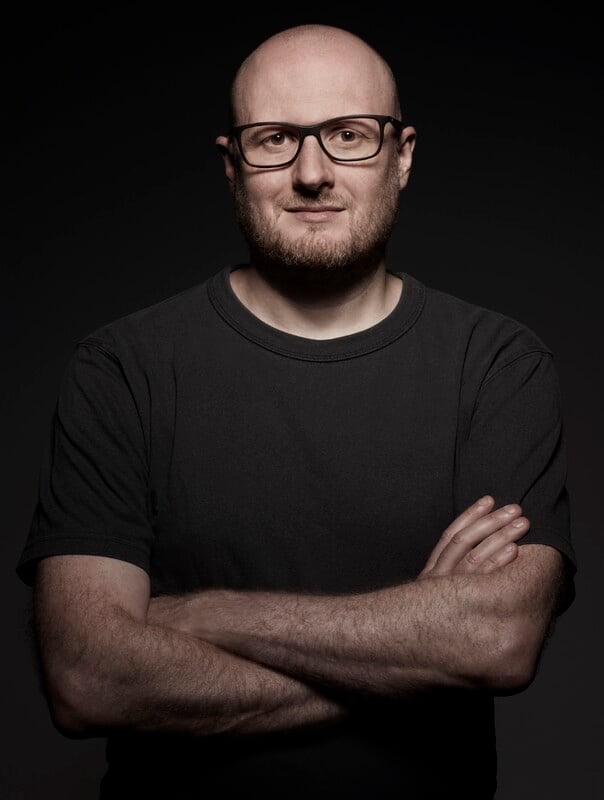
How did the film come about and what makes it so special?
The short film was inspired by a vivid dream about a surreal music festival in a Scottish cave, which Olaf developed into a story over the following year. With the emergence of advanced AI tools in late 2025, he finally felt able to bring this vision to life as a mockumentary.
“The Hum was born from a vivid, slightly chaotic dream I had that was so striking I had to write it down the second I woke up. In this dream, I found myself on a remote Scottish island at an obscure music festival where dwarf-like musicians were performing deep inside limestone caves, huddled around a massive modular synthesizer. As a film composer with a lifelong obsession with synths, the music I heard in that dream stayed with me for months.”
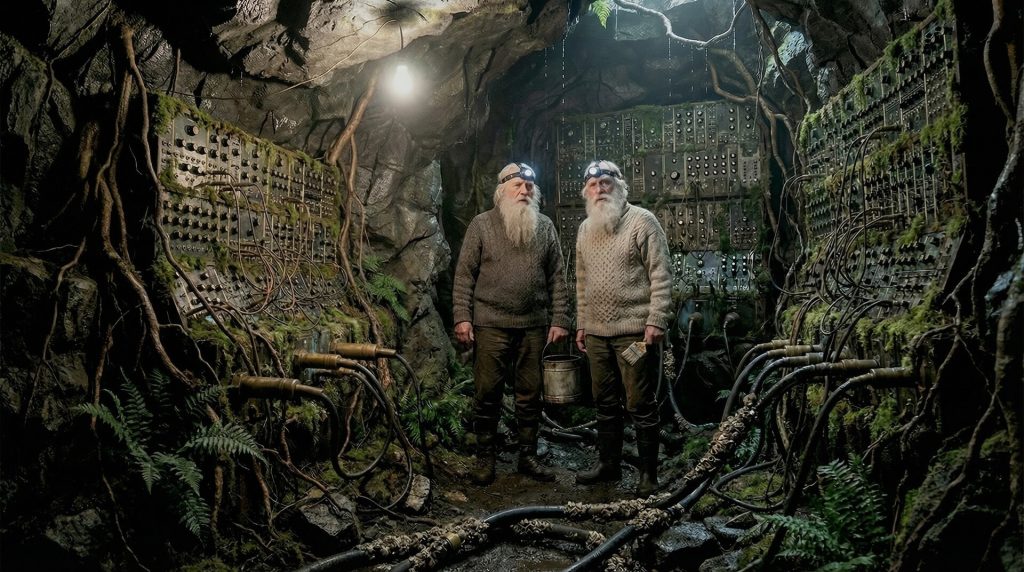
With ongoing technological progress and the growing power of artificial intelligence, the independent film scene is also entering a new phase. This raises the question: how does it actually work, and what really goes into the production of an AI-generated film like The Hum? It is important to clarify that artificial intelligence does not replace every stage of filmmaking. Olaf provides insight into how The Hum was actually brought to life:
“While the visuals were AI-assisted, the whole process was still deeply human. I spent roughly 80 to 100 hours writing the script, refining prompts, „casting“ virtual characters, and handling the entire edit. The voices were generated and synced using ElevenLabs, and of course, being a film composer, I composed the entire score myself using my analogue synthesizers to match the otherworldly vibe of The Hum.”
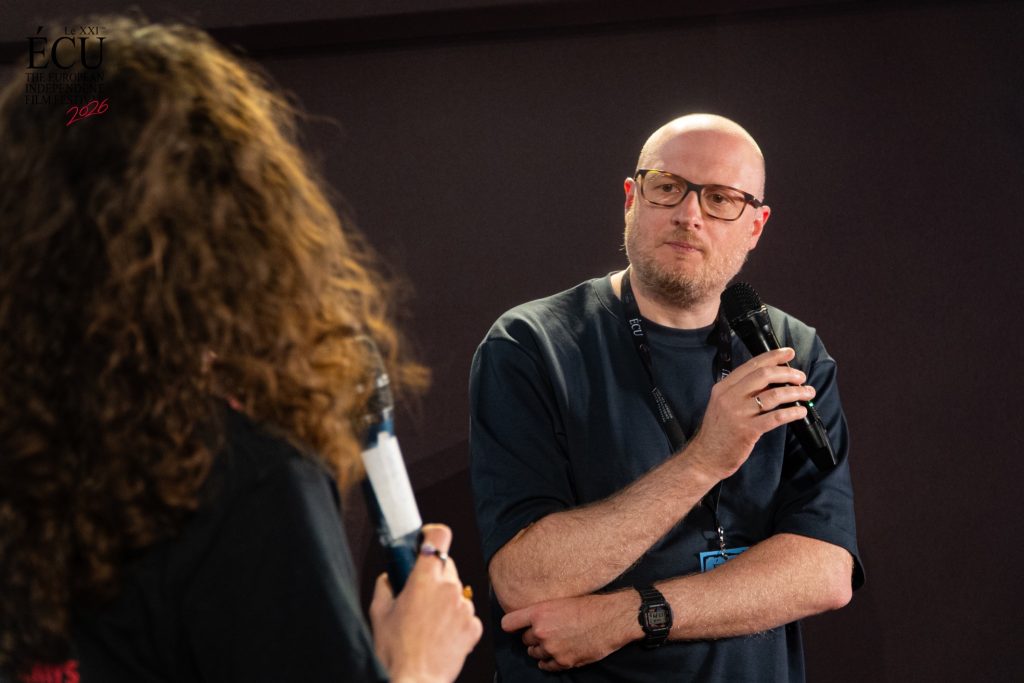
Even AI films require a great deal of work, creativity, and above all expertise. Olaf clearly mastered all of this, earning the Best Independent Artificial Intelligence Film Award at ÉCU. We are excited to see what further developments the independent indie film scene will bring, and of course what projects Olaf Taranczewski will pursue next. For The Hum, his aim was not to make a film about AI itself, but to use AI as a tool to create a mockumentary that pushes boundaries and leaves a lasting impression.
Curious? Then it’s time to watch the five films we’ve presented!
 English
Leave a Reply