
The voices behind the films: Reza Sam Mosadegh; Nora Jaenicke; Audrey Olsen; Quentin Kwiatkowski; Julie Fackler.
Written by Chiara De Liberti
This April, the ÉCU – The European Independent Film Festival once again lit up the independent film scene, turning the spotlight on daring storytellers and boundary-pushing cinema. From intimate narratives to visually striking experiments, this year’s lineup proved that indie filmmaking is as vibrant—and as fearless—as ever.
This year, 26 winners took to the stage of the Les 7 Parnassiens cinema, leaving a lasting impression on every spectator.; among the many outstanding entries, a handful of works stood out for their artistic strength, emotional depth, and unique approach to filmmaking. In this article, we take a closer look at five of this year’s winners from five different categories and the creative minds behind them—that everyone is talking about.
REZA SAM MOSADEGH – INKUBUS
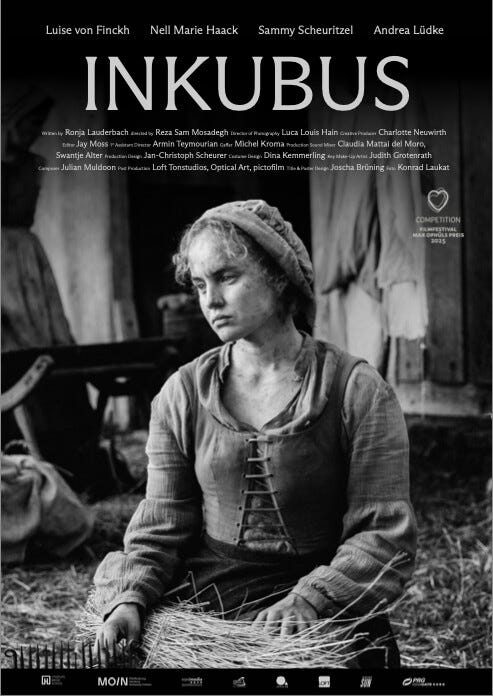
This year winner of Europe’s Best Independent Film 2026 goes to Reza Sam Mosadegh for Inkubus. We are in Germany in the 17th century: after marrying into a peasant family, Hildegard finds herself caught up in a maelstrom of patriarchal and clerical violence. When her stepdaughter Agnes draws the attention of the Inquisition to the family, Hildegard must gather up the strength to fight – for Agnes and ultimately for herself.
A period short film created in collaboration with the Hamburg Media School, where director and screenwriter Reza earned his Master’s degree in Film Program. And yes, we are looking at an independent university project that far exceeded the expectations of any typical student film, standing out through its meticulous attention to locations and props, as well as its dark, dreamlike direction and cinematography.
In the 80’s, as the child of a refugee family, Reza Sam Mosadegh fled from Iran to Germany. He was not allowed to return to Iran for more than 20 years. The only visual connections to his old homeland were Iranian films and camcorder recordings of his family. Thus, Reza recognized the important meaning of film in his early years. Thereupon, he studied media economics and media sciences. He has high expectations in terms of visual language, which is important to him because, as a refugee child, he wanted to understand films despite the language barrier.
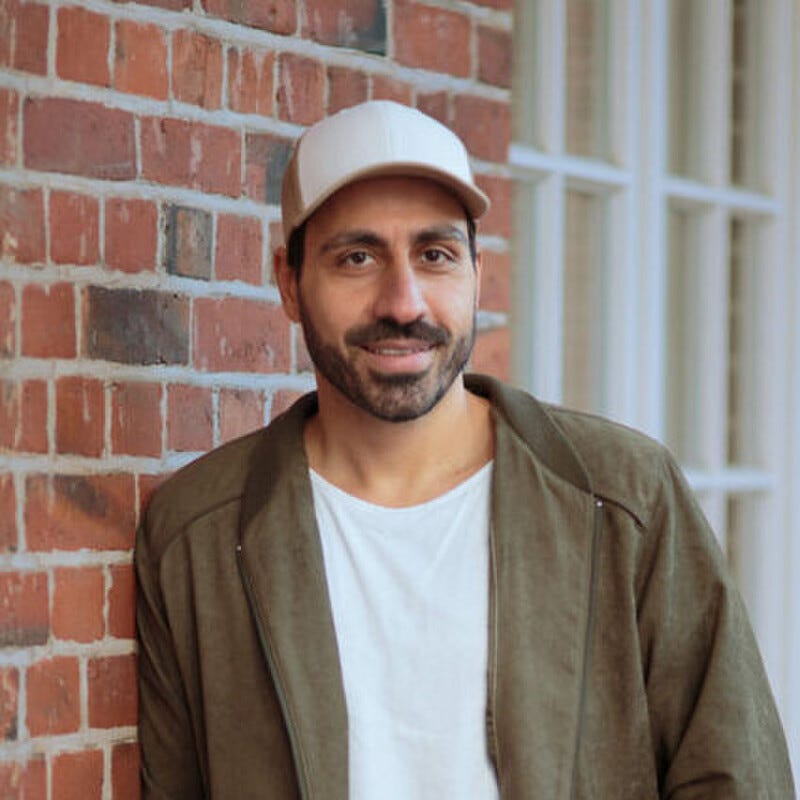
“I really believe that you can, as long as we live on this side of the world, you can make one choice in your life, you can choose to be a victim or to be a maker, or to be a winner to say no, I’m not a victim. It doesn’t matter what the circumstances are, I will fight and do something out of my life because this is the choice we have.”
Reza worked with writer and feminist activist Ronja Lauderbach. Through long conversations and intense brainstorming sessions — during which Reza also questioned his own position as a male director telling a deeply female-centered story — the two ultimately brought this masterpiece to life, which went on to win the festival.
“I think to have empathy as a man is because of the life I had. I know how it feels. To be discriminated against. I know how it feels if someone wants to push you down because of your situation, for me it was always my skin color or religion or my origin but in the end, if you are discriminated against as a woman, or if I’m discriminated because of my skin color, the pain is the same.”
The director explained that the film was inspired by real events, although the team deliberately chose not to emphasize this within the movie itself. Their intention was to allow the audience to enter the story freely, without the immediate distance or shock that often comes with the label “based on a true story.” At the same time, he stressed that the project was deeply rooted in historical research and conceived as an act of respect toward the many women who were persecuted, threatened, and burnt under institutional violence. “So many people lost their lives because of this,” he said, “the characters experience how religion can bring comfort, but also control,” describing the film as both a memorial and a reflection on how these dynamics still resonate today.
A central creative decision was to avoid explicitly showing sexual violence on screen. Together with the team, the director sought ways to make the audience feel the fear and trauma experienced by the women and the child in the story without reproducing graphic images of abuse. He argued that cinema too often gives more narrative space and power to perpetrators than to victims, and that the film consciously tried to reverse that perspective by keeping its focus on those who suffered rather than on the men who committed the violence.
The Hamburg Media School gave Reza just ten shooting days, with the child actress allowed on set for only three hours a day, which made organizing the production extremely challenging. At one point, the assistant director even had to stand in as the girl’s body double whenever she could not be present — a funny behind-the-scenes memory that Reza shared with us.
Reza also described the film as a turning point in his creative process, explaining how he finally allowed his spiritual side to shape his directing approach. “I’m a very spiritual person in real life, and I never dared to bring my spiritual life and my directing side together,”he said. For the first time, he abandoned traditional methods: “I didn’t do any rehearsals. I didn’t do any casting. I really trusted my instinct.”
Even ten days before shooting, the cast had not yet been finalized. Reza explained that he chose actors based entirely on personal connection and emotional energy rather than auditions. Speaking about the lead actors, Luise and Sammy, he recalled: “I just spent the whole day with them and I was looking for energy between us. I didn’t do any rehearsal with them, nothing.” Afterward, he called the producer and told her: “This is it. These are the ones we need.”
Finding the child actress proved even more delicate because of the film’s themes. “You don’t want to traumatize a kid for a film,” Reza explained, adding that the team worked closely with coaches and carefully considered the parents’ sensitivity to the subject. Remarkably, the final choice for the role was made only a week before filming began.
Reza also revealed the unusual process he used with his actors before shooting. Instead of rehearsals, he guided them through meditations and “dream journeys,” creating the emotional history of each character from birth up to the events of the script. “I didn’t want them to see the set, I didn’t want them to meet each other before,” he said. During these sessions, actors described sensations, memories, and motivations for their characters without knowing what would later happen in the film. According to Reza, the result was “deep character-driven” performances built through intuition and imagination. On set, he avoided giving rigid directions, preferring to trust the actors’ instincts.
“They are artists,” he said. “Give them space, believe in their mind and their fantasy.”
What struck us most was his approach to directing, rejecting what he describes as “old school directing,” which ultimately destroys people through its hierarchical mentality. What truly matters, he says, is the sense of family created on set, because making a film should first and foremost be fun — filmmakers should allow themselves to play more with this art form.
Reza showed us how the past can instruct and guide us in our choices, and how the world still has so much to learn from it. Yet together, by asking ourselves the right questions and engaging in meaningful reflection, we may still find a way forward.
NORA JAENICKE – ISOLA
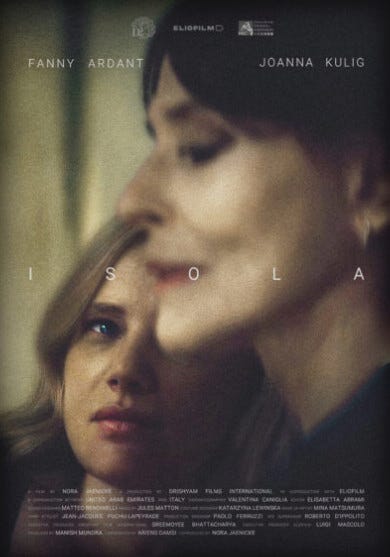
Joanna, who’s stuck on an island with her disabled and much older husband Oskar, enters into a strange relationship with his caretaker Ada. The two women become entangled in a cat and mouse game with fatal consequences.
Winner of Europe’s Best Independent Dramatic Feature, this is only the beginning of a much richer and more layered story, set in idyllic Italy, which director and writer Nora Jaenicke shared with audiences in her debut feature film Isola, starring Joanna Kulig (the star of Cold War by Paweł Pawlikowski) and French icon Fanny Ardant.
Raised in Italy by German parents and now living between the United States and England, she surprised everyone at the festival when she walked through the cinema with her sweet baby in her arms. But this is certainly not the first time Nora has handled a camera with such mastery, she has written and directed eight short films that have collectively received over 30 international awards. In addition to her work as a filmmaker, Nora is the founder of the Nostos Screenwriting Retreat and the Elba Film Festival, both dedicated to nurturing emerging talent and fostering a global community of screenwriters and independent filmmakers.
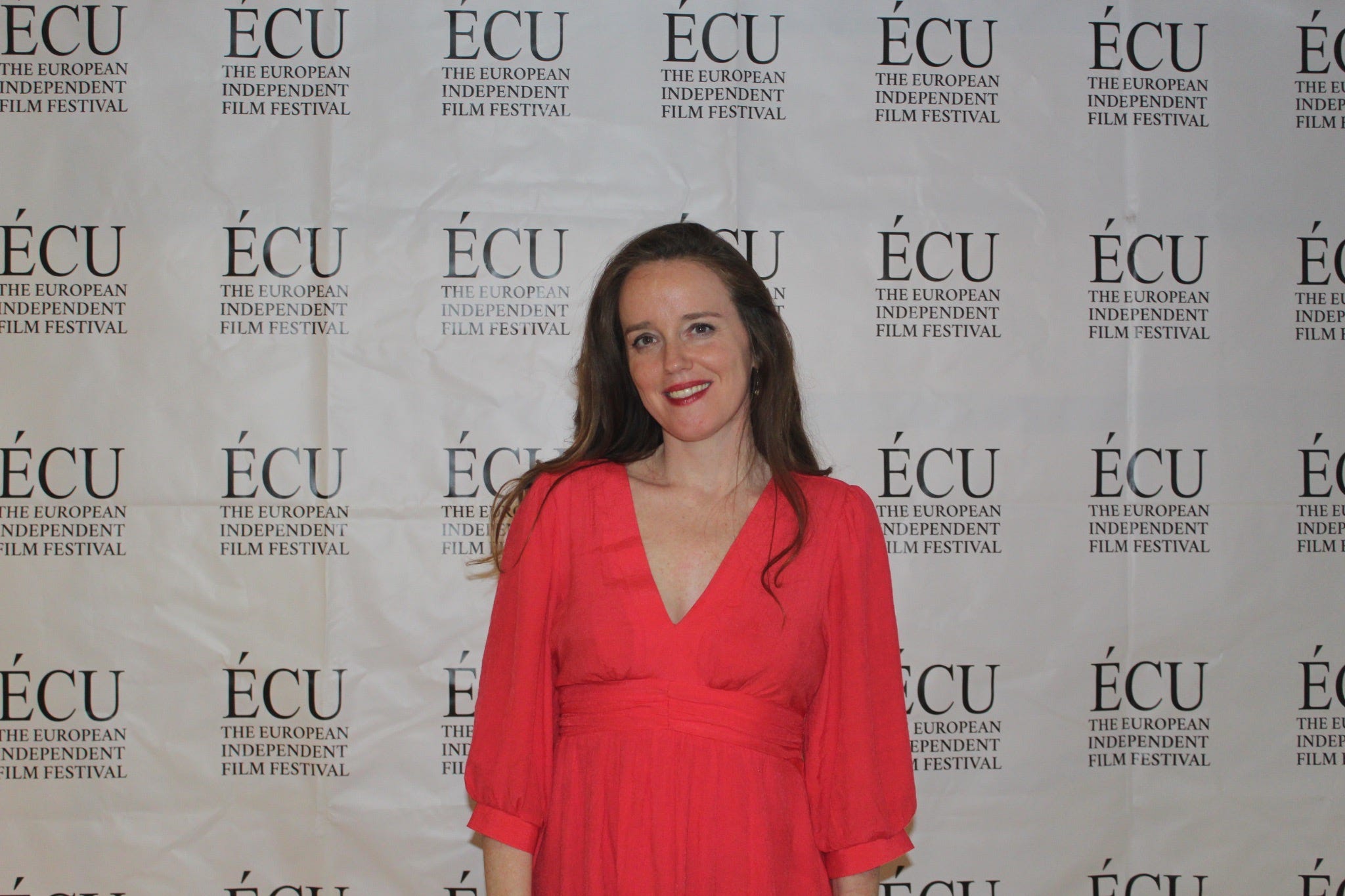
But how did the film come about ? Let’s dive deep into the story!
“So, initially, it was a theater play. I wrote it during a class that I took for theater writing, I was intrigued by triangle stories, and I’m really interested in psychological stories, , where the whole narrative is sort of traced in the psychology of the characters, and so it had its origin in a play, and then I decided to turn it into a feature because as a filmmaker, that made sense.” Nora reveals.
Another element that truly keeps you glued to the screen is the setting, with its distinctive and evocative landscapes.
“Then we filmed in Italy, at the end, on Elba, so we really created this sort of southern Italian atmosphere on the Tuscan island because, initially we were gonna shoot in Stromboli, which is, you know, a volcanic island, but shooting there would have been a logistical nightmare.”
The film was shot in just 30 days, and the editing took about six to seven months, with breaks in between. But the real behind-the-scenes insight—and a sense of curiosity—comes from the talented Joanna Kulig and her linguistic abilities, because a true actor absorbs every trait of the character they portray.
“She threw herself into this new language and managed to navigate all those difficulties adapting her entire acting process to another language, but it was surprising to see that when she had to speak in Italian, it was so easy to her, almost as if she had a past life in Italy.”
Nora tells us that Joanna had never studied Italian, but learned it at the very last minute by reading the script—leaving actor Marco Rossetti surprised, as he had already prepared to perform in English, completely upending the original plan. In short, she was meant to take on this role.
When we talk about Isola, the cultural diversity of its cast immediately stands out: this is a film featuring a Polish star and a French icon, set in Italy, performed in a language that is not their native one—nor even the director’s. The language barrier can sometimes be an obstacle, though it was certainly handled with professionalism.
“I think the most important lesson I learned regards good communication… mediating between all these different people that have different personality, that have different sensitivities.I think it’s super important to take a lot of time to get to know them, and so that then when you’re on set you know who they are, you know how they speak, you don’t have to start to translate whatever they’re saying, or understand the subtext.”
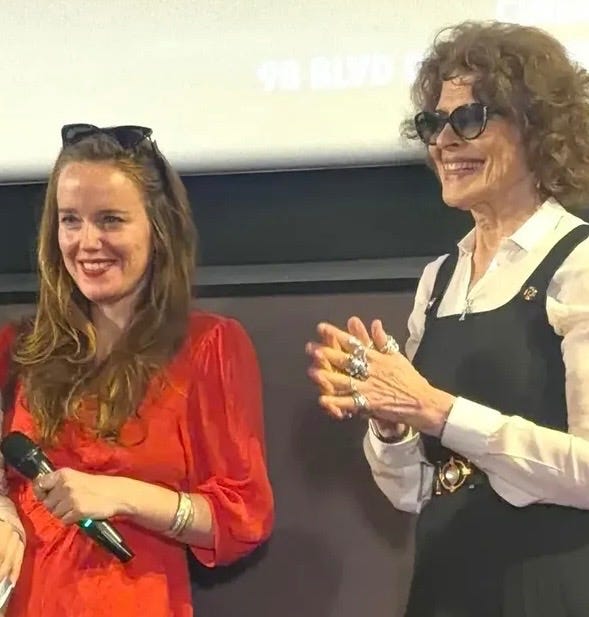
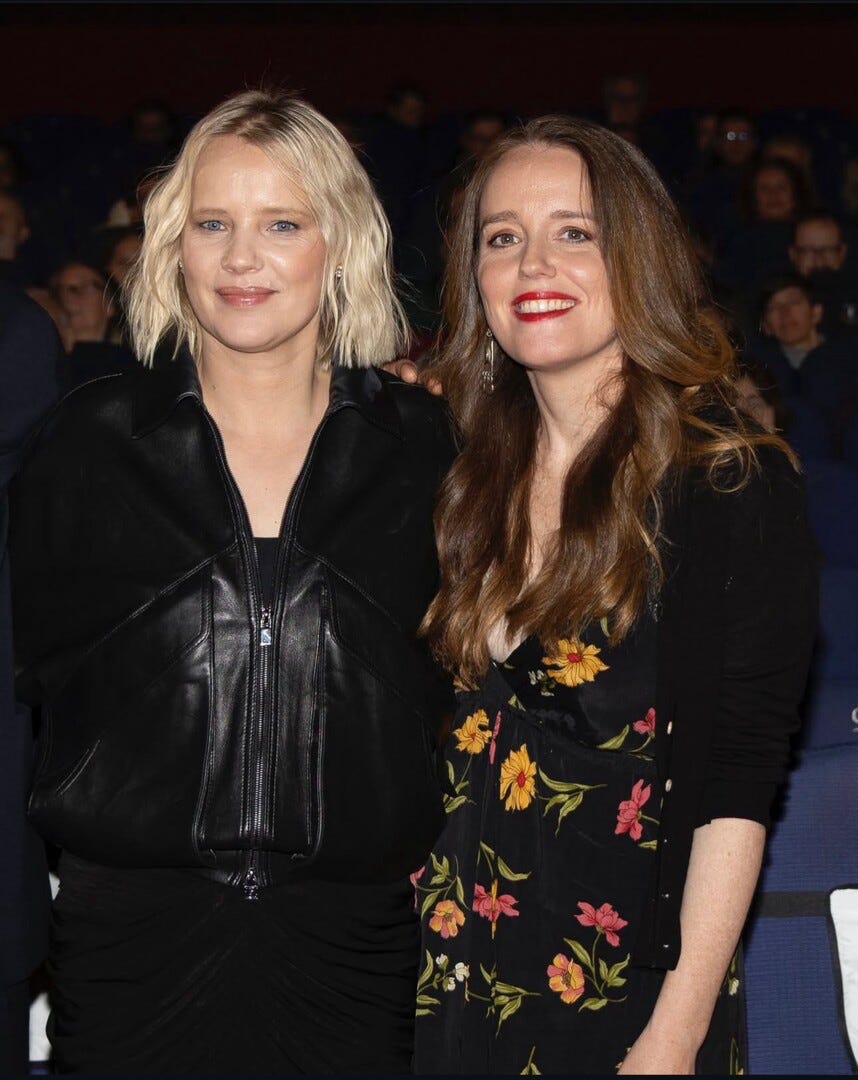
With this shared reflection, Nora Jaenicke offers us a broader perspective on the preparation, the origins, and the sense of community built on set that brought Isola to life.
AUDREY OLSEN – PUNKIE
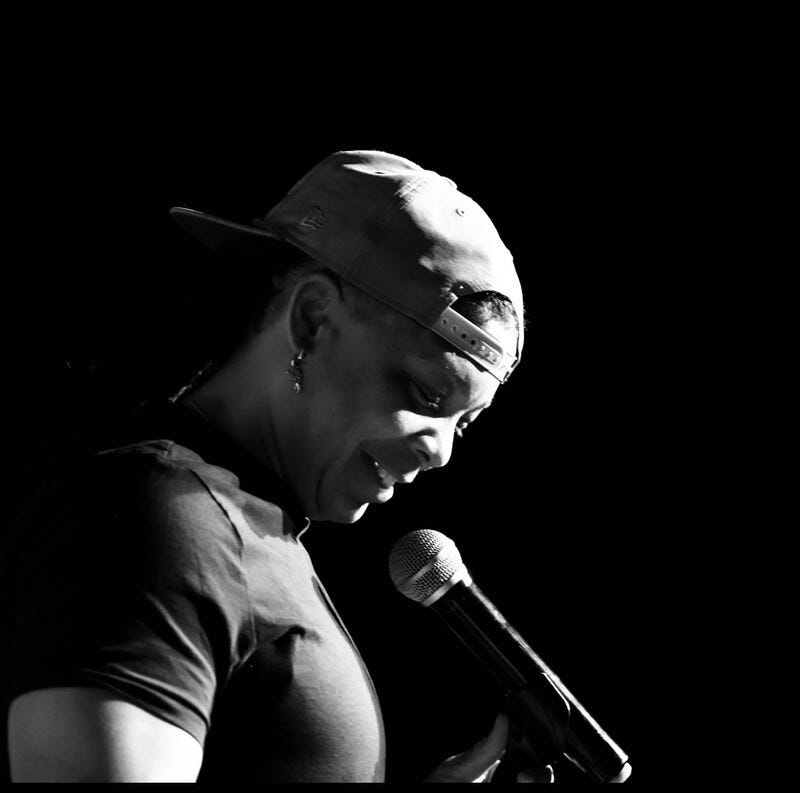
Now, let’s move on to another category—and another nationality! The winner of Best Non-European Independent Documentary goes to the talented Audrey Olsen, a graduate of Chapman University film school and an Emmy Nominated television producer. This documentary is a raw, behind the scenes portrait of stand up comedian and Saturday Night Live star Punkie Johnson, as she battles the chaos of life on the road and fights to protect her authentic artistic voice while confronting a spiraling personal crisis.
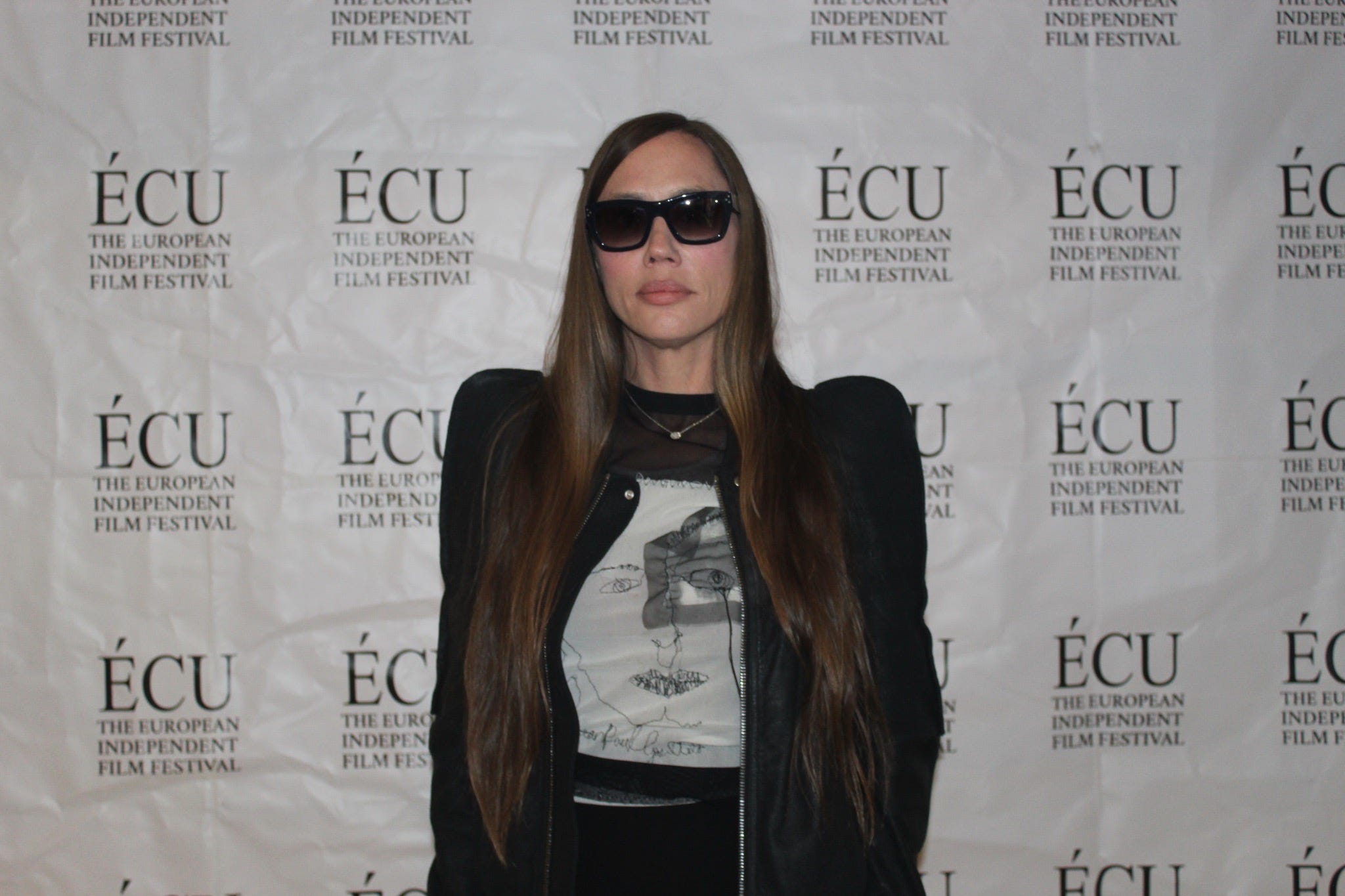
“Punkie began at a moment of profound rupture in my own life. After the loss of my husband of sixteen years, I found myself forced to reconsider not only how I lived, but why I told stories at all. In that period of grief and recalibration, I gravitated toward work that felt alive, unpredictable, and deeply human — stories that insisted on meaning rather than offering it neatly.” Audrey’s statement hits like a punch to the gut, she felt a deep need to create something meaningful. And it is precisely the authentic, sharp Punkie Johnson that Audrey needs to face her emotional journey and help clear the constant fog in front of her eyes.
But how did this encounter come about?
“I was a big fan of stand-up comedy. I was going to a lot of comedy shows, and I had seen her Instagram videos, and it was just wild all day every day. She’s just a big ball of energy, just a very interesting and crazy person. And I was like, oh my gosh, I wanna reach out to her, and so I did, and I asked her if I could just come on the road with her to see what it was like, and if I could film her on the road while she was doing some of her stand up, and she agreed.”
Audrey follows Punkie on tour for three years, capturing her cross-country, chaotic journey as she develops her comedy special, along with her ups and downs at Saturday Night Live and the many trials and tribulations she faces, ultimately leading to a mental breakdown under the pressure of trying to satisfy mainstream media. Meanwhile, the editing process lasts about a year, with continuous cuts and re-edits, a phase Audrey undertakes in complete isolation, finishing the documentary entirely on her own.
To learn more about the comedian’s one-of-a-kind personality, we asked Audrey to share a funny anecdote:
“I think the funniest moment that really jumped out to me, is when she opened up for Iggy Pop, he performed without his shirt on, so she decided that she wanted to also take her shirt off and do her performance with no shirt on, which was a surprise for everybody. The venue was trying to stop her. We all thought she was gonna get arrested.”
But at the end of the tour, what remains is the beginning of a lasting friendship and a set of new values and lessons that not only Audrey Olsen has etched into her heart, but that anyone who has the privilege of witnessing the evolution of such a bold, unapologetic woman can take away. A woman who refuses to be broken, even in her most vulnerable and therefore most human moments. As Audrey ultimately confides:
“She has taught me to find the humor in everything, even when things are difficult, because things will get better. And also, to really remain true to yourself, to never compromise your principles for anybody, if you’re not being yourself it’s gonna eat you alive.There’s billions of people in the world and you’ll find the people that you’re supposed to be around and that are for you.”
QUENTIN KWIATKOWSKI – SUNYATA
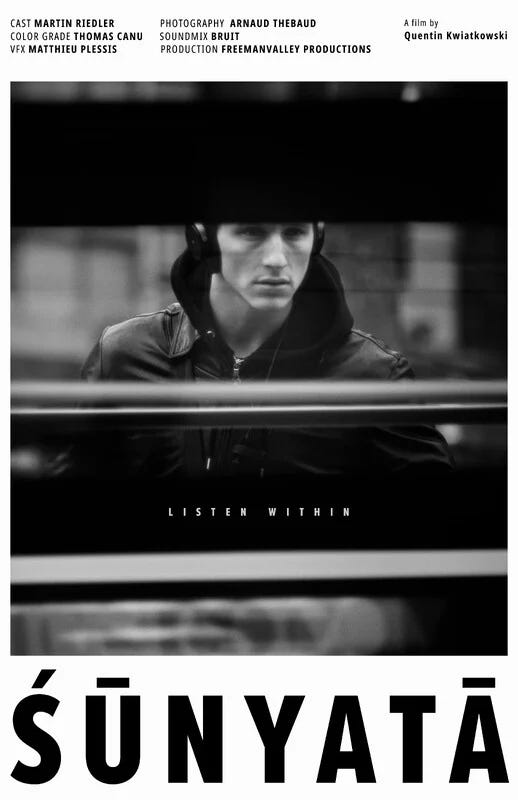
A powerful piece of storytelling can last only a few minutes and still leave you astonished. Such is the case with the eclectic short films presented at the festival, among which one in particular captivated both audiences and jury members, taking them on a sensory journey beyond time and space. The winner of Europe’s Best Experimental Film 2026 is Sunyata by Quentin Kwiatkowski. We are faced with a sound engineer’s poetic quest to understand the meaning of silence in our noisy world. This contemplative short film invites us to listen deeply to the spaces between sounds—where true presence might be found.
Quentin has spent the past 10 years working as an editor across commercials, documentaries and short films, while also directing a number of personal projects along the way. Sunyata is the first film where the subject felt truly personal — and where he began to discover a stronger, more defined visual grammar of his own.
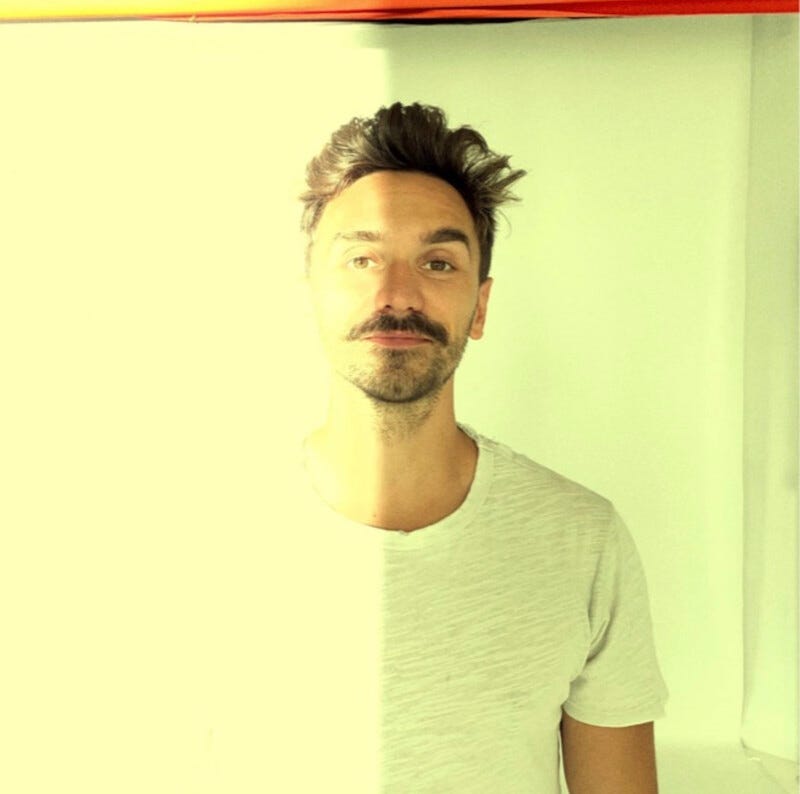
Let’s discover together how the idea was born and the message it carries within.
“I’ve been doing a lot of silent and meditation retreats since I was 20 years old, so it’s been like 16 years now. It didn’t really come into one of those retreats, but every time you come out from them, especially when you live in the big city as I do in Paris, you find out that everything just attacks you, the noise, the people, the cars, the subways and that kind of stuff.”
As Quentin said, even when you go inside a forest, you can have people walking, speaking super loudly, there are birds noises or simply the wind. There is always some stuff going on. So the question is: Where can we find silence? And what if it can help us in a way?
In Quentin’s case—but not only his—a great city like Paris consumes every ounce of available time. Between work commitments and the noise of streets racing by too fast, finding a shared moment between the actors, the DoP, and the sound mixer proved challenging. That is why both the shooting and editing process stretched over the course of nearly a year. It was certainly worth the wait.
By closely observing the imagery and poetic essence of Sunyata, one gets the feeling of coming into contact with an inner energy greater than ourselves. Quentin Kwiatkowski tried to explain to us the intention behind this experimental project:
“It is super important for me to tell stories that deeply connect with not only who I am or my values but with something beyond myself, a kind of energy that is around us. I’m really in touch with that kind of thing, and I think I need to, as an artist, to use that energy when I write, when I want to tell stories.”
Because every form of art and storytelling originates from within and connects with the outside, creating an atmosphere of understanding and community.
JULIE FACKLER- ARUNDEL’S LIGHTHOUSE
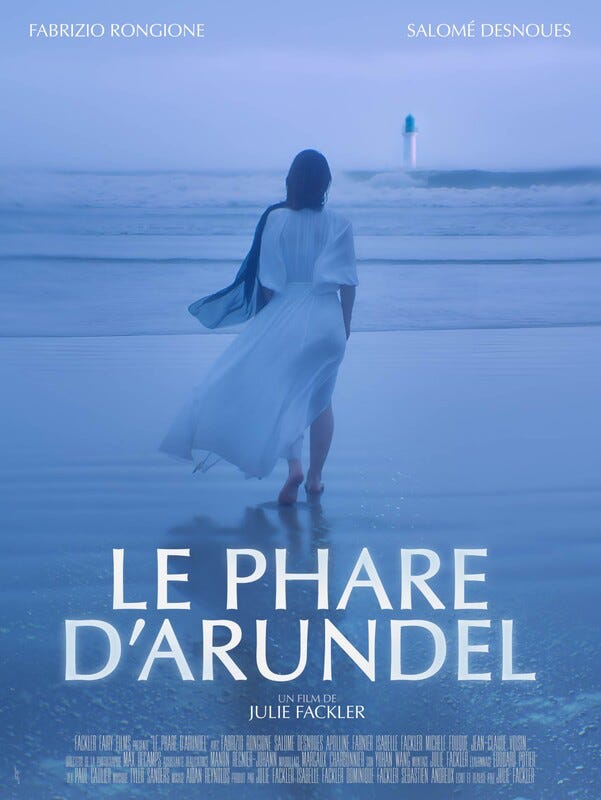
“Do you remember the first time you saw death?” With this question begins Arundel’s Lighthouse, winner of the 2026 Europe’s Best Independent Dramatic Short, beautifully written and directed by Julie Fackler. This film is a poetic parable set in a French city by the sea. When a mysterious woman concerned with mortality shows up at a psychiatrist’s door, the two go on a long journey through time that unravels the hidden tethers they have to each other and the world.
Julie Fackler is an emerging French director whose work is deeply shaped by her diverse academic and creative background. Influenced by iconic filmmakers such as Alfred Hitchcock, Francis Ford Coppola, Steven Spielberg, and Sergio Leone, these cinematic legends have guided her imaginative vision and artistic direction. After completing her studies in France, Julie moved to the United States to further her craft at CALARTS (California Institute of the Arts), Walt Disney’s renowned film school in Los Angeles. There, she joined the ranks of celebrated alumni like Tim Burton and Sofia Coppola. Alongside her film career, Julie has spent the past three years working with a Grenoble-based association that supports sick children and their families. This deeply human experience profoundly influenced her work and Arundel’s lighthouse is a direct result of this emotional journey. With an intimate narrative style, the film explores these same themes, reaffirming Julie’s unique ability to craft stories that resonate deeply with audiences and invite them to reflect on life, love, and loss.
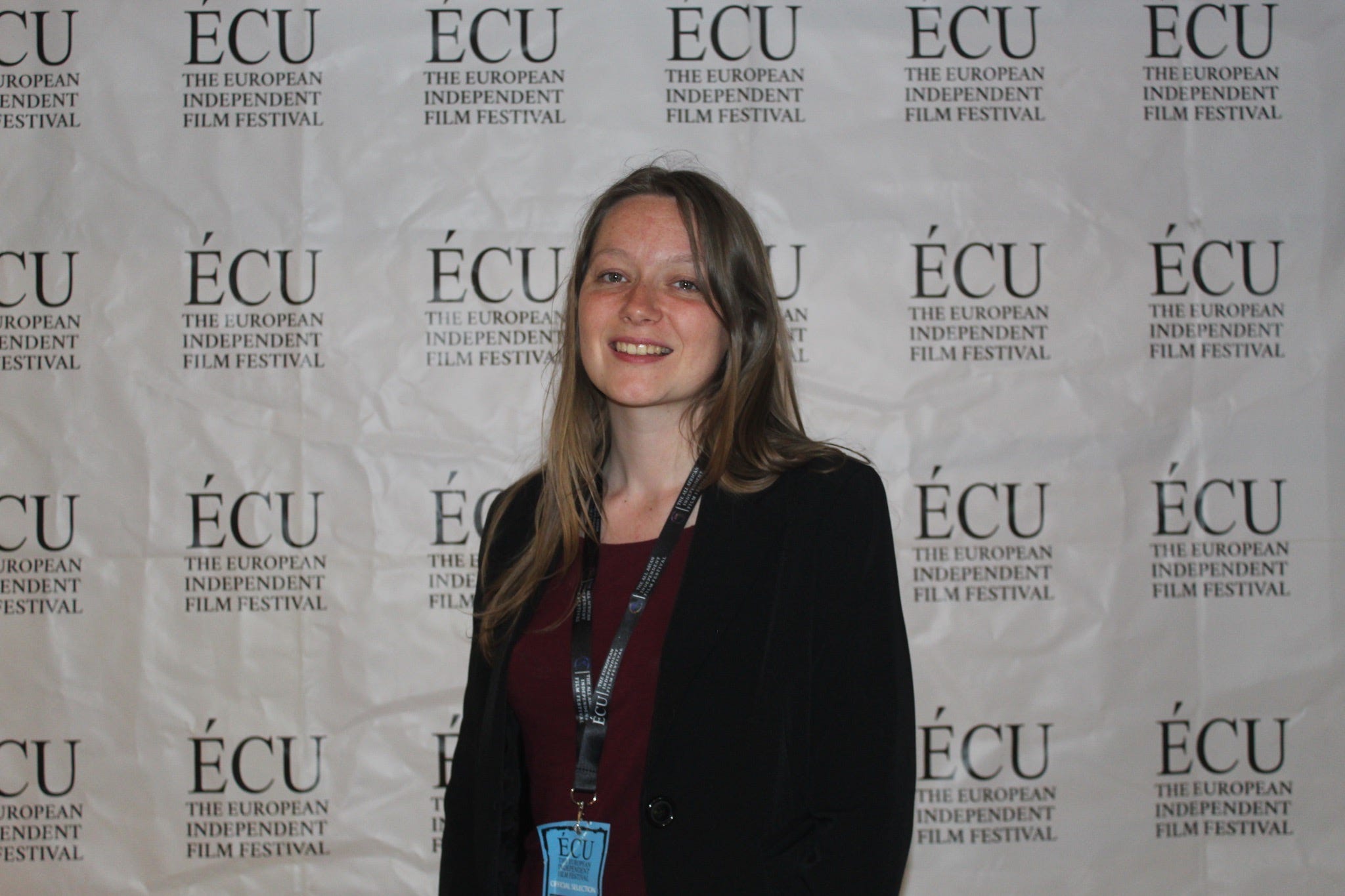
According to the director, death remains one of society’s greatest taboos, a fear that is unconsciously passed down from one generation to the next, despite the fact that it is an inevitable part of every human life. Through her statement, she reflects on how the loss of a loved one never truly erases their presence: memories continue to inhabit our minds like ghosts, sustained by the love we still carry for them. Whether one believes in spirits or not, she suggests that those we lose continue to live within us, as love and death together shape the “ghosts” that accompany our existence.
The filmmaker explains that the inspiration behind the project stems from her three years of work within an association supporting families of children suffering from cancer. With this film, her intention was to offer comfort and reassurance to anyone confronted with death, approaching this universal and unavoidable reality with both poetry and humanity.
“It’s harder when you have to face death and never talk about it. In my family, and in France more generally, it has always been a taboo. I wanted people to understand that it is part of life and that we need to accept it. So I tried to portray this subject in a poetic and magical way,” explains Julie Fackler.
Her vision of life also emerges through her directorial style, shaped by pastel tones and soft, blurred imagery that gives the impression of watching a dream — or a distant world where the actors move and dance with lightness and grace.
“There’s one particular scene in which the lead actress runs into the sea and dives underwater. The water was freezing at that time of year on the west coast of France, and I jumped in with her because I wanted us to experience the same sensations. It was a fun moment to share, and it remains one of my favorite memories from the shoot.”
The ÉCU team was deeply impressed — and even captivated — by her work, already eager to witness another masterpiece from Julie Fackler.
“Yeah, I have a project. I already have an idea for a future film. It’s going to be a thriller/sci-fi, and you will definitely see more ocean scenes!”, she reveals enthusiastically.
Today’s cinema needs to slow down, to unveil reality without judgment and with a touch of imagination. Human beings carry within them a pure energy that is not destined to simply vanish or disappear; it is up to our curiosity to explore it with sensitivity and care. Arundel’s Lighthouse offers us a path to follow — one that guides us without ever letting us lose our way.
 English
Leave a Reply